
Who says you have to pass your full motorcycle test before you can start learning advanced riding skills? Certainly not PECAM!
Saturday 17th October saw the second RideSafe course take place at Monks Wood Police Training Centre, bringing together Cambridgeshire Constabulary, PECAM and a group of enthusiastic riders keen to develop their skills, confidence and understanding of safer motorcycling.
RideSafe is a little different from most motorcycle training initiatives. Specifically designed to provide additional training for learner riders following their CBT, it offers an opportunity that is, if not unique in the UK, certainly highly unusual. After all, why wait until someone has passed their full test before introducing them to the skills and techniques that can help make them a better, safer rider?
The original RideSafe concept and first course were generously funded by the Huntingdon Freemen’s Trust. That initial event proved so successful that PECAM and Cambridgeshire Constabulary decided to take the initiative further, with the ambition of making RideSafe a regular fixture in the motorcycle training calendar.
A Little Theory, Plenty of Practice
The day began with two classroom sessions delivered by the Police, covering road safety and an introduction to advanced riding. Plenty of useful information to get everyone thinking, before a short lunch break and the opportunity to put some of that new knowledge into practice.
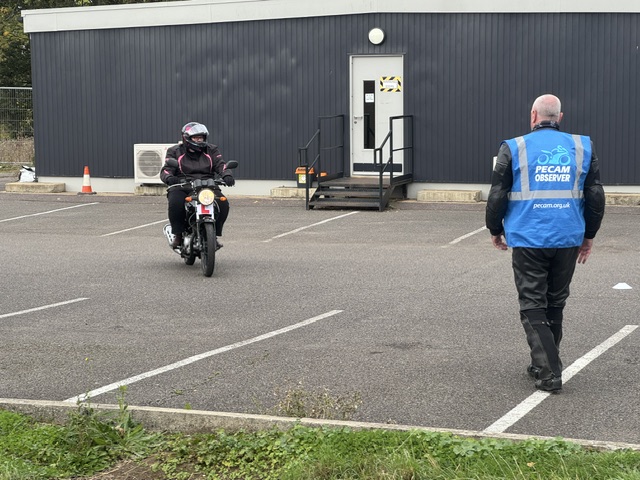
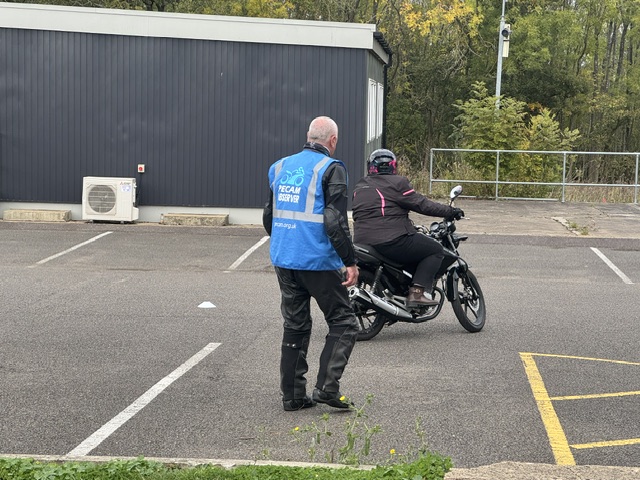
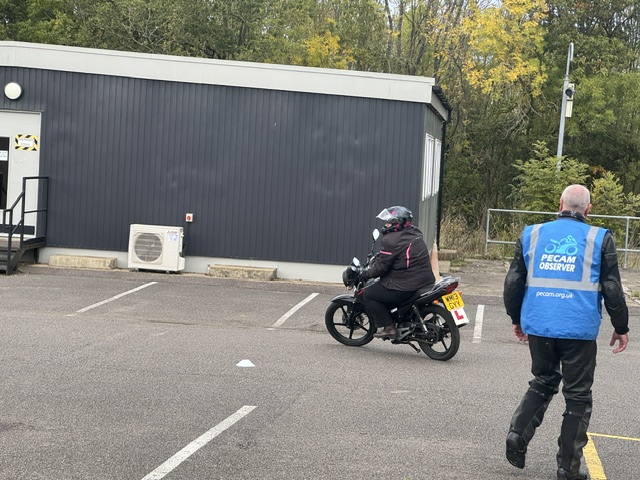
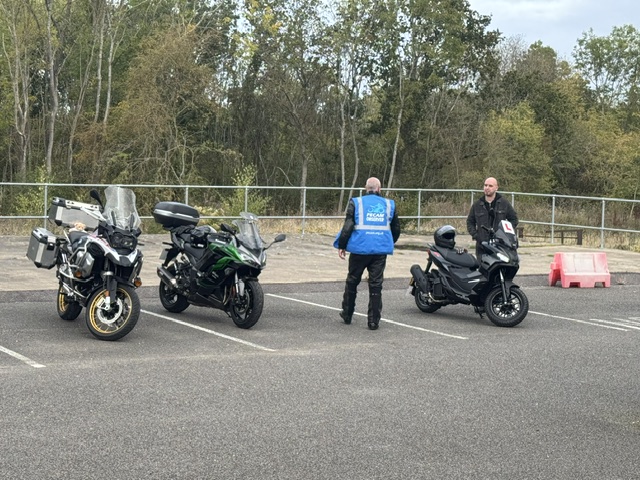
For the afternoon, participants were divided into two groups. While one group tackled slow-speed motorcycle handling exercises in the training centre car park, the other headed out onto the road for an observed ride with a nationally qualified PECAM Observer. The groups then swapped over, ensuring everyone experienced both activities.
The combination works extremely well. The Police bring their professional road safety knowledge and motorcycle training expertise, while PECAM’s volunteer Observers provide practical coaching, encouragement and individual feedback.
And, as anyone who has attended one of our slow-speed sessions will know, keeping a motorcycle under control at walking pace can sometimes be more challenging than riding it at normal road speeds!
Clearly There Is an Appetite for More
Recruitment for the course was organised by Cambridgeshire Constabulary through a social media campaign. The response was remarkable: 22 people signed up in a single weekend.
That level of interest speaks volumes about the demand for accessible, structured rider development, particularly amongst those at the beginning of their motorcycling journey.
And the feedback suggests RideSafe is delivering exactly what those riders are looking for.
Participants scored the course against eight criteria, using a five-point scale where five represented excellent. The overall average was an impressive 4.85 out of 5.
Asked about their most valuable takeaway, participants highlighted road positioning, limit points, positive feedback from their observed rides and, importantly, recognising the skills they wanted to practise further.
One particularly enthusiastic participant reflected that their previous training had been just the beginning and that it was now time to learn how to ride properly!
Another simply answered: “Everything on the day.”
We will take that!
A Partnership That Really Works
Our sincere thanks go to PC A J Boddington, the Police’s Casualty Reduction Officer, and PC Darren Osker, the combined forces’ Senior Motorcycle Instructor, for their enthusiasm, professionalism and commitment to making the day such a success.
We are also extremely grateful to Cambridgeshire Constabulary for funding and hosting this second course, and to the seven PECAM Observers who volunteered their Saturday to coach and support the participants. As always, they did a fantastic job.
The enthusiasm of the riders, the quality of the feedback and the strength of the partnership all reinforce our belief that RideSafe has a valuable role to play in motorcycle safety.
Advanced riding principles shouldn’t be something riders only discover years after passing their test. Introducing them earlier can help establish good habits, build confidence and encourage riders to keep developing their skills throughout their motorcycling lives.
Two successful courses completed, and hopefully many more to come.
Because when it comes to becoming a better rider, there’s no such thing as starting too early!