
Ypres Tour – Day Two and Day Three
Day Two
Tyn Cot Cemetery
Our third stop of the day was to Tyn Cot Cemetery, located in an area which was known as the Ypres Salient where Commonwealth, French, Belgian and German forces fought almost continuously throughout the First World War.
One our Group, Steph, had prior to Covid restrictions purchased a special commemorative poppy pin to mark the 100th anniversary of the Battle of Passchendaele, the unique pin came with a certificate detailing a British soldier (R H Butterfield) whose life was lost during the 103 day of the Battle of Passchendaele, this Soldier was remembered at Tyn Cot and Steph had a cross to place alongside his name.
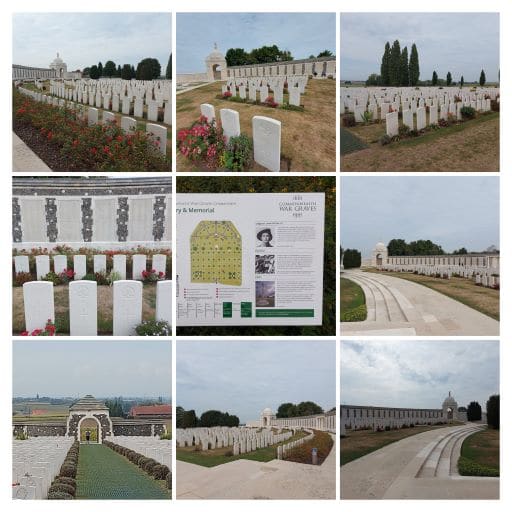
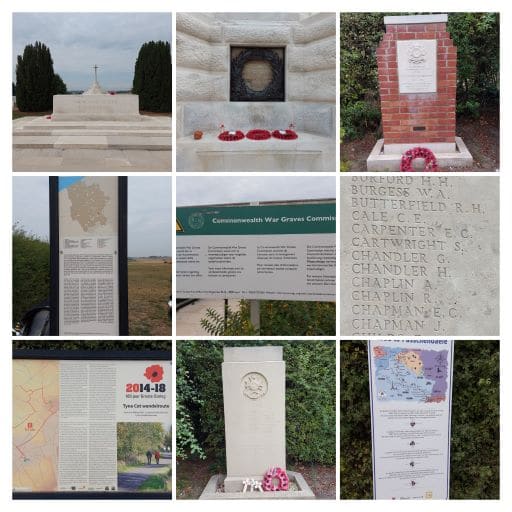
In 1917, British forces launched the Third Battle of Ypres, which raged from July to November. Forces from the UK, Australia, Canada, New Zealand and South Africa fought to push the Germans off the low ridges that dominate the area. On 4 October 1917, during the phase known as the Battle of Passchendaele, the 3rd Australian Division captured a group of German Bunkers on the ridge below the village of Passchendaele.
One of these bunkers was unusually large and was used as an advanced dressing station after its capture. From 6 October 1917 to the end of March 1918, 343 graves were made, on two sides of it, by the 50th (Northumbrian) and 33rd Divisions, and by two Canadian units. The cemetery was in German hands again from 13 April to 28 September, when it was finally recaptured, with Passchendaele, by the Belgian Army.
There are now 11,961 Commonwealth servicemen of the First World War buried or commemorated in Tyne Cot Cemetery. 8,373 of the burials are unidentified but there are special memorials to more than 80 casualties known or believed to be buried among them. Other special memorials commemorate 20 casualties whose graves were destroyed by shell fire. There are also 4 German burials, 3 being unidentified.
The TYNE COT MEMORIAL forms the north-eastern boundary of Tyne Cot Cemetery and commemorates nearly 35,000 servicemen from the United Kingdom and New Zealand who died in the Ypres Salient after 16 August 1917 and whose graves are not known. The memorial stands close to the farthest point in Belgium reached by Commonwealth forces in the First World War until the final advance to victory.
Hooge Crater Museum
Our final visit of the day was to the Hooge Crater Museum and Café, we were booked in for lunch at 1.00pm, Bob had once again not disappointed in his choice of refreshment stops. Hooge Crater Theme Café, had an extensive menu and the food was excellent.
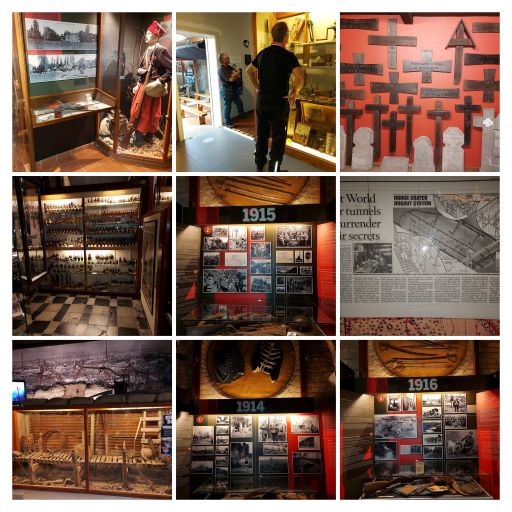
Following lunch, the option of visiting the Museum was taken up by the majority of the group. The collections included extensive weaponry, uniforms, and equipment of all the armies that took part in the four-year battle. In glass cabinets, rare military garments of the troops that fought in the Ypres Salient are displayed. Life during the First World War is also depicted as true to life as possible with the help of life-size scenes. They range from life in German bunkers and British trenches to life-size horses ridden by cavalry troops. With an original Ford T ambulance from 1916 and a replica of a Fokker DR1, the Hooge Crater museum can immerse you in the life of a soldier at the front.
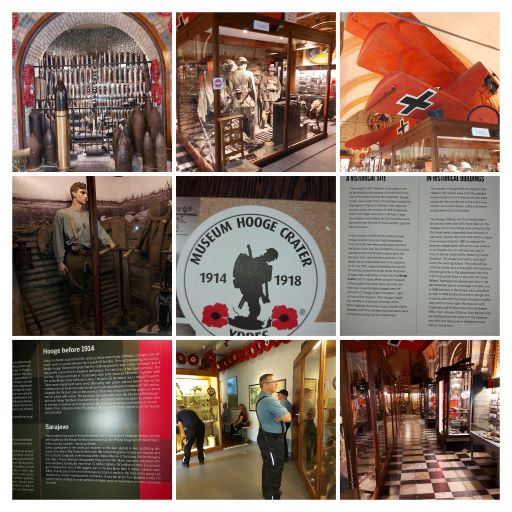
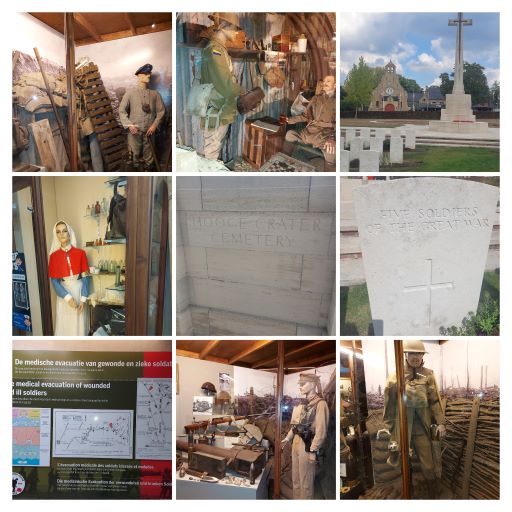
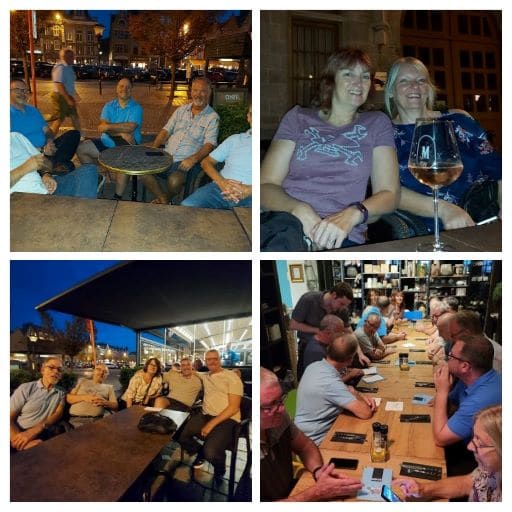
After returning to the Hotel for our final evenings stay, we enjoyed another night in Ypres, once again sampling the food and drink on offer.
Day Three
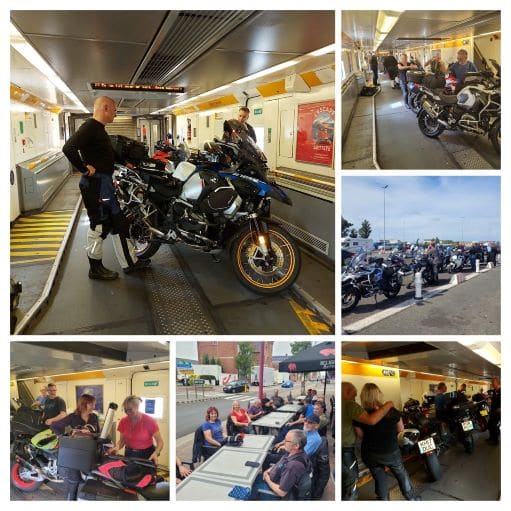
Day three was the end of our weekend visiting Ypres, following our wonderful breakfast, we packed up our bikes and started our homeward journey, heading for our return trip on the Channel Tunnel back to the UK.
PECAM Ypres Tour
The hotel was so much more than we could have hoped for, Daphne was a fantastic host, very accommodating, attentive, and knowledgeable, the rooms were clean, comfortable and modern, the bar well stocked and the breakfast was fabulous.
Ypres is a beautiful Town, whilst mostly rebuilt after WW1 it still remains true to its historic origins.
We all thoroughly enjoyed our time in Belgium, Bob (Stewart) had obviously spent a lot of time organising the whole trip, everything went like clockwork, but it was very relaxed. It was lovely to spend quality time with people you usually only see on ride outs or training, a big thank you to Bob for all the time he spent organising the trip and the research with the hotel and the places of interest.
Certainly, a very interesting and thought-provoking trip, a very poignant reminder of a big part of our history and of so many lost lives, many of them so very young.
Keeping their Memories Alive.
Lest We Forget.