
Two consecutive evenings this week saw PECAM exploring rather different aspects of motorcycling. On Tuesday we were learning about the latest technology designed to protect our pride and joy from the unwanted attentions of motorcycle thieves, whilst on Wednesday we were sharing the principles of advanced motorcycling with enthusiasts whose machines were built long before satellite navigation, traction control and ABS were even a consideration!
Tuesday – Staying One Step Ahead of the Motorcycle Thieves
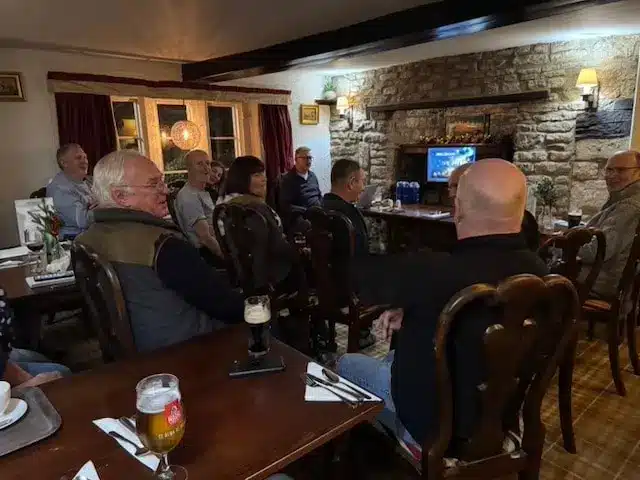
For our November social evening, we welcomed guest speaker Iain Burkinshaw, Account Director at Trak Global Security Solutions, a company specialising in vehicle tracking, security and recovery.
Motorcycle theft remains a significant problem in the UK. Figures obtained from the DVLA through a Freedom of Information request show that 16,585 motorcycles were reported stolen during the 12 months to the end of May 2026, compared with 17,178 in the preceding year. Whilst a reduction of 3.5% is welcome news, that still equates to more than 45 motorcycles disappearing every single day.
More recent figures, published by Bennetts BikeSocial using data from the Police National Computer, paint an even more concerning picture. Between January and October 2026, the published monthly figures totalled almost 17,000 motorcycle and scooter thefts across the UK.
To put that into perspective:
- Approximately 1,700 motorcycles and scooters stolen every month.
- Around 56 stolen every day.
- More than two stolen every hour.
- One stolen approximately every 26 minutes.
In October alone, 1,807 motorcycles and scooters were reported stolen, equivalent to one every 25 minutes.
Interestingly, it is not necessarily the expensive sports bikes and adventure bikes that top the thieves’ shopping lists. Smaller-capacity commuter machines, including the Yamaha NMAX 125 and Honda PCX125, feature particularly prominently.
As tracking technology has evolved, so too have the techniques employed by those determined to separate us from our motorcycles. It is something of a technological arms race.
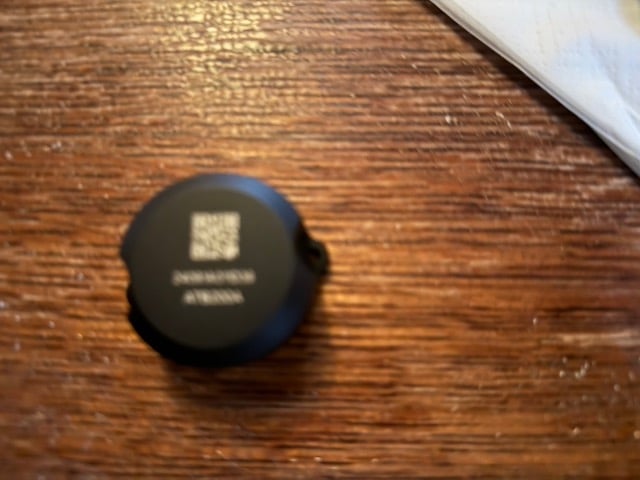
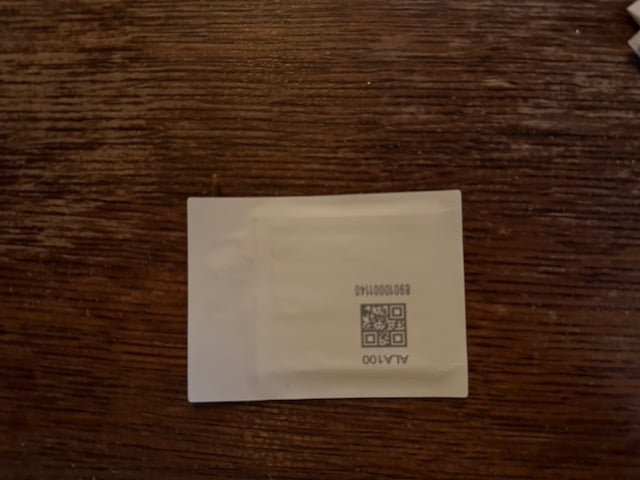
Iain gave us a fascinating insight into the next generation of tracking devices that Trak Global is currently developing and beta testing. The devices are remarkably small, opening up opportunities to conceal them on a motorcycle or even disguise them as an otherwise unremarkable motorcycle component.
Perhaps even more interesting is the approach to electronic concealment. The technology is designed to make the devices considerably more difficult to detect using the electronic scanning equipment employed by increasingly sophisticated motorcycle thieves, potentially giving the legitimate owner and recovery teams a significant advantage.
Trak Global’s approach goes beyond simply identifying the location of a stolen vehicle. The company combines tracking technology with round-the-clock monitoring and specialist recovery services, reporting an impressive 91% stolen vehicle recovery rate across its operations between January and September 2026.
Of course, a tracker shouldn’t be seen as a replacement for good physical security. Research by Bennetts, based on its own insurance claims data, indicates that even the use of a basic disc lock can reduce the likelihood of theft to around a third of that for an otherwise unsecured machine.
A layered approach to motorcycle security, combining good-quality physical locks, sensible parking choices and tracking technology, offers multiple lines of defence.
We’d much rather our motorcycles stayed exactly where we left them in the first place!
Wednesday – New Skills for Old Machines?
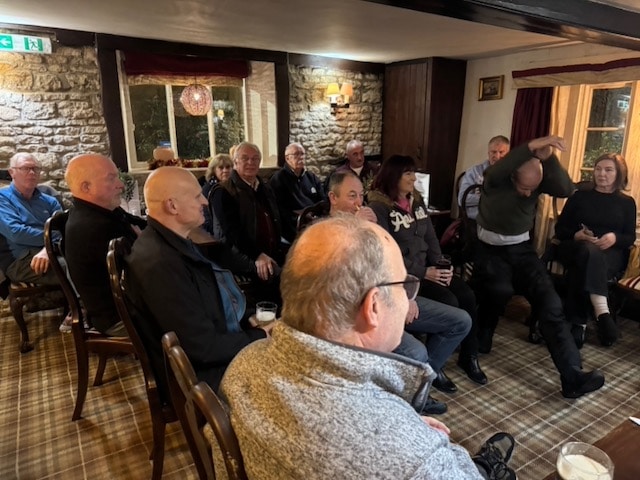
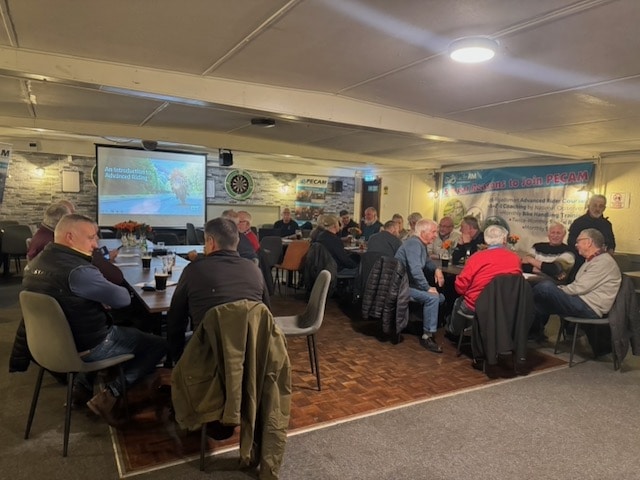
On Wednesday evening the tables were turned, with PECAM’s Chairman, accompanied by Bob Stewart, visiting the Peterborough and Lincolnshire Vintage Motorcycle Group to deliver an introduction to advanced motorcycling and safe group riding.
Bob is a former PECAM Chief Observer and former member of the Metropolitan Police’s prestigious Special Escort Group (SEG), bringing considerable experience of advanced motorcycling in both a civilian and professional policing environment.
Motorcycle technology may have changed beyond recognition over the decades, but the fundamental principles of good road riding have stood the test of time remarkably well.
The evening explored the Police system of motorcycle control, as described in Motorcycle Roadcraft, and the application of IPSGA – Information, Position, Speed, Gear and Acceleration.
Early and complete observation, making observational links, anticipating the actions of other road users and developing a flexible riding plan are all skills that can be applied equally effectively whether riding a beautifully restored vintage motorcycle or a modern machine equipped with the latest electronic rider aids.
The ability to identify a potential hazard before it becomes an actual hazard is one of the fundamental principles of advanced motorcycling. The earlier we recognise and understand what is happening around us, the more time we have to decide what to do about it.
We also explored the use of limit points in assessing bends, selecting appropriate speeds and ensuring that we can always stop safely within the distance we can see to be clear on our own side of the road.
Perhaps these skills are even more pertinent when riding vintage motorcycles, where braking, suspension and tyre technology may not offer quite the same capabilities as their modern counterparts. Understanding the capabilities of the machine beneath us is, of course, part of being an advanced motorcyclist, whatever its age.
Safe group riding formed another important part of the presentation. Riding with friends is one of the great pleasures of motorcycling, but it introduces another set of considerations. Maintaining appropriate separation, avoiding the pressure to keep up, communicating effectively and ensuring that every rider remains responsible for their own riding decisions are all essential ingredients of an enjoyable group ride.
Being part of a group should never mean delegating responsibility for our own safety to the rider in front.
After all, the objective is for everyone to enjoy the journey, not just arrive at the destination!
Different Technology, Common Thinking
At first glance, the two evenings might appear to have little in common. One looked towards the future of electronic security, whilst the other explored long-established riding techniques with enthusiasts who celebrate motorcycling’s past.
Yet both were fundamentally about understanding risk, anticipating what might happen and taking positive action before it does.
Whether we are protecting our motorcycles from increasingly sophisticated thieves or developing our riding skills to better manage the challenges of today’s roads, being proactive rather than reactive is rarely a bad thing.
Technology can undoubtedly help us in both respects, but it should complement, rather than replace, our own judgement and decision-making.
And whilst modern motorcycles might have more computing power than some of us had available during our entire education, the most important processor on any motorcycle remains the one located inside the rider’s helmet!
Many thanks to Iain for giving up his Tuesday evening to share his knowledge with PECAM, to Bob for sharing his experience and expertise on Wednesday, and to the Peterborough and Lincolnshire Vintage Motorcycle Group for inviting us along.
Two very different evenings, plenty of food for thought and, as always, a shared enthusiasm for all things two-wheeled.
References and Further Reading
- Wheels Alive – Britain’s Most Stolen Motorbikes, 28 July 2026. Motorcycle theft statistics derived from DVLA Freedom of Information data obtained by Anglo Scottish Finance.
https://www.wheels-alive.co.uk/britains-most-stolen-motorbikes/ - Bennetts BikeSocial – UK Motorcycle Theft Report, 9 November 2026. Monthly motorcycle and scooter theft figures compiled by RetainaGroup from the Police National Computer, together with motorcycle security and insurance claims analysis.
https://www.bennetts.co.uk/bikesocial/news-and-views/news/2026/uk-motorcycle-theft-stats-crime - Trak Global Security Solutions – Company information, vehicle tracking and recovery services, and published vehicle recovery performance for January to September 2026.
https://www.trak-global.com/company/ - Motorcycle Roadcraft – The Police Rider’s Handbook. The established reference for the Police system of motorcycle control and advanced motorcycling principles.
Note: The DVLA and Police National Computer theft figures are drawn from different datasets and are not directly comparable. Daily and hourly theft rates have been calculated from the respective published figures. Trak Global’s recovery statistics relate to its wider vehicle recovery operations and are not specific to motorcycles.