
What happens after you complete your Compulsory Basic Training, attach the L-plates and head out onto the road?
For many riders, the answer is simple: you are largely on your own.
PECAM has been working with the Huntingdon Freemen’s Trust and Cambridgeshire Constabulary to help bridge that gap. With generous funding from the Trust, we developed RideSafe: a new one-day course aimed particularly at younger and less experienced motorcyclists living in the Huntingdon area.
Interest was certainly not in short supply. We received 35 applications for the 15 funded RideSafe places, with 19 riders meeting the eligibility requirements. We offered places to all 19, although the usual combination of work commitments, medical problems and life generally getting in the way meant that 12 riders joined us on 12 September.
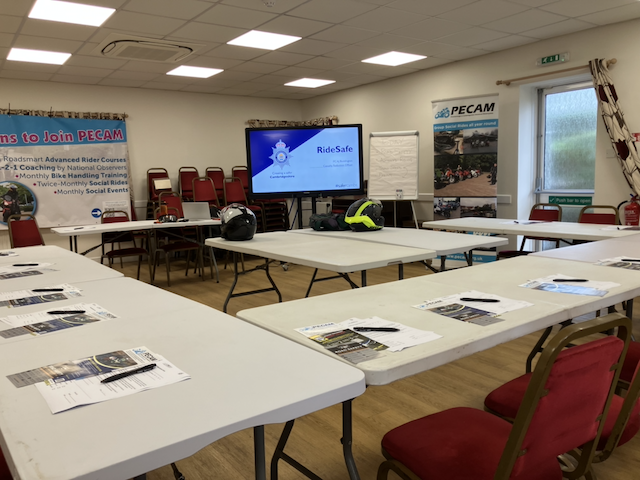
The day began with PC A J Boddington, Cambridgeshire Constabulary’s Casualty Reduction Officer, providing a detailed and sometimes sobering look at motorcycle collisions and road safety. Nobody enjoys accident statistics, but understanding where and why things go wrong is an important part of becoming a safer rider.
PC Darren Osker, the Constabulary’s Senior Driver and Rider Training Officer, then introduced the group to advanced riding and the IPSGA system of motorcycle control. Positioning, observation, planning and hazard management were explored, giving participants a glimpse of how advanced riders approach the road.
After lunch, it was time to swap PowerPoint for horsepower.
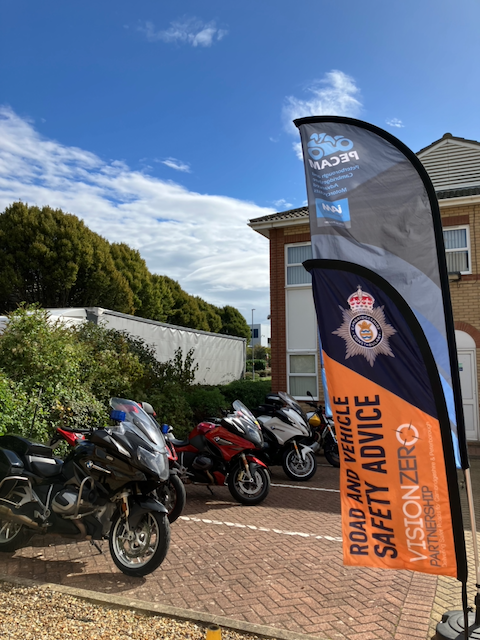
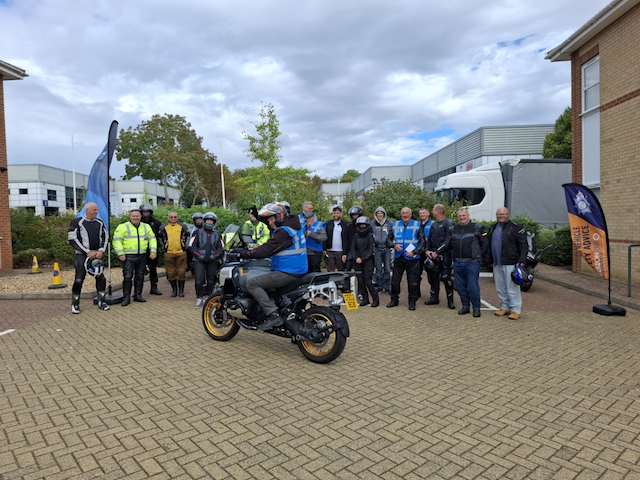
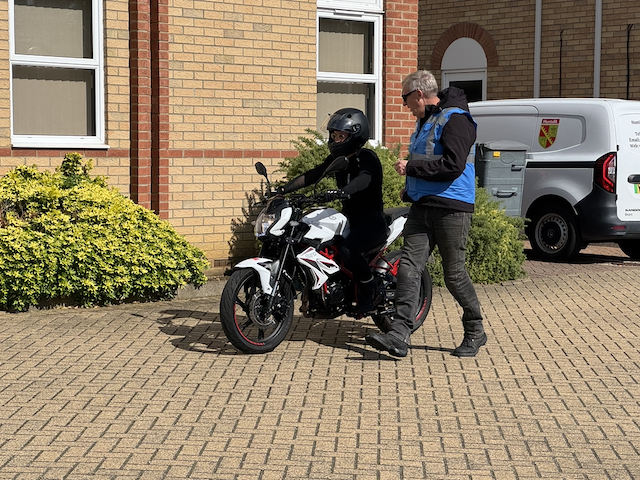
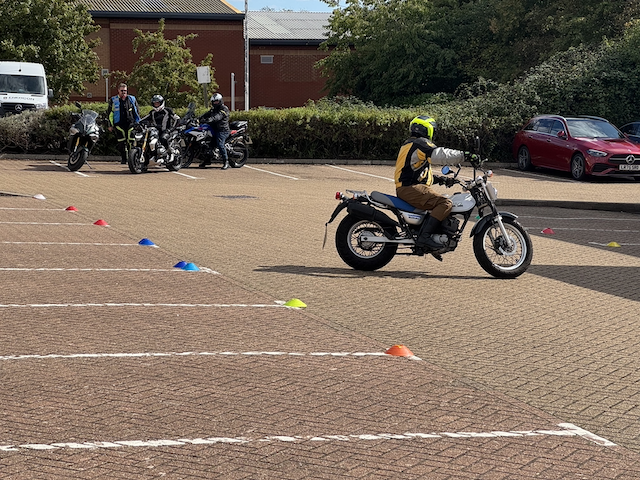
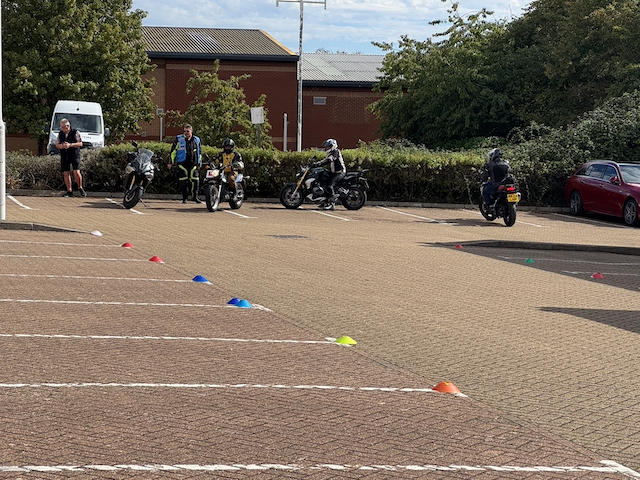
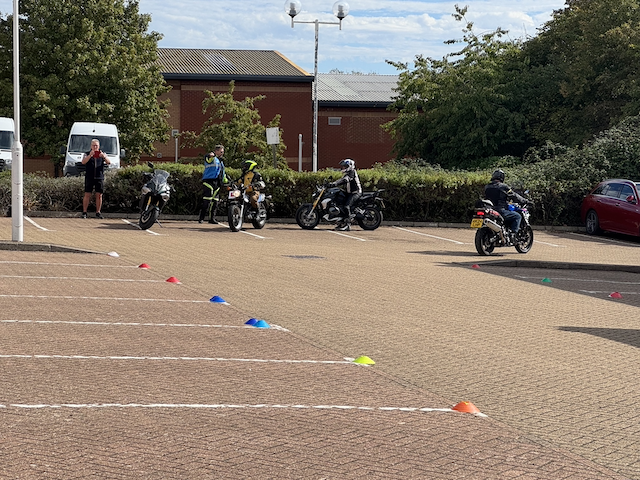
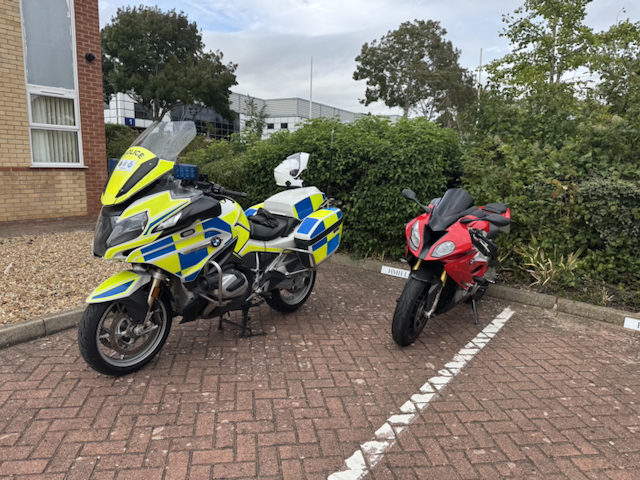
The riders divided into two groups. One tackled PECAM’s slow-speed exercises, practising clutch, throttle and rear-brake control through slaloms and U-turns. As many experienced riders know, travelling at walking pace without putting a foot down can sometimes be considerably more challenging than riding at normal road speeds!
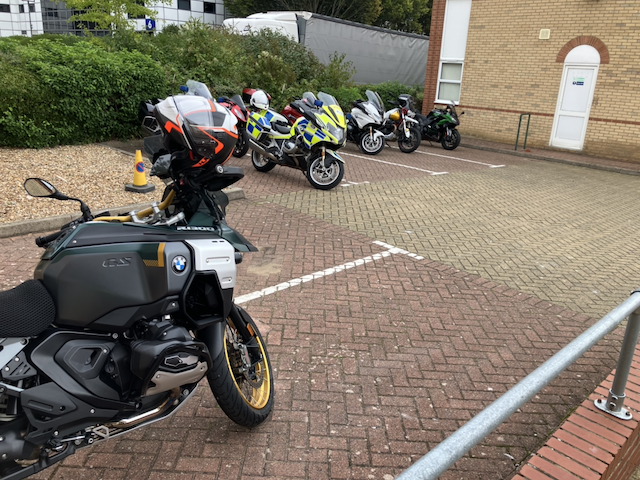
Meanwhile, the second group headed onto the road for individual coaching with either a police motorcyclist or a PECAM IMI-qualified National Observer. Each rider received a personal debrief before the groups swapped activities.
The feedback was exceptional. Across eight measures, average scores ranged from 4.67 to 5.00 out of five. Road-safety awareness and improvement in slow-speed manoeuvres both scored 4.92, while the clarity and value of the observed-ride debrief received a perfect 5.00.
Participants particularly valued slow-speed control, road positioning, corner assessment and learning to look further ahead. One comment neatly captured the reason for creating RideSafe:
“Hope to have more of this type of training, as after CBT you are on your own.”
The Trust’s funding is also providing ten eligible local riders with fully funded IAM RoadSmart Advanced Rider Courses. All ten participants have now been selected and their course vouchers purchased, ready for the next stage of their riding development.
RideSafe may have started as a pilot, but it need not end there. PECAM is already discussing the possibility of delivering four further courses with Cambridgeshire Constabulary during 2027.
Our thanks go to the Huntingdon Freemen’s Trust, Cambridgeshire Constabulary, the PECAM volunteers and, of course, the riders who approached every part of the day with enthusiasm. We hope this was the first RideSafe course of many.