
Day 3 – Saturday 13th September
We woke up to the final day of our Tour excited as to what Bob had in store for us today.
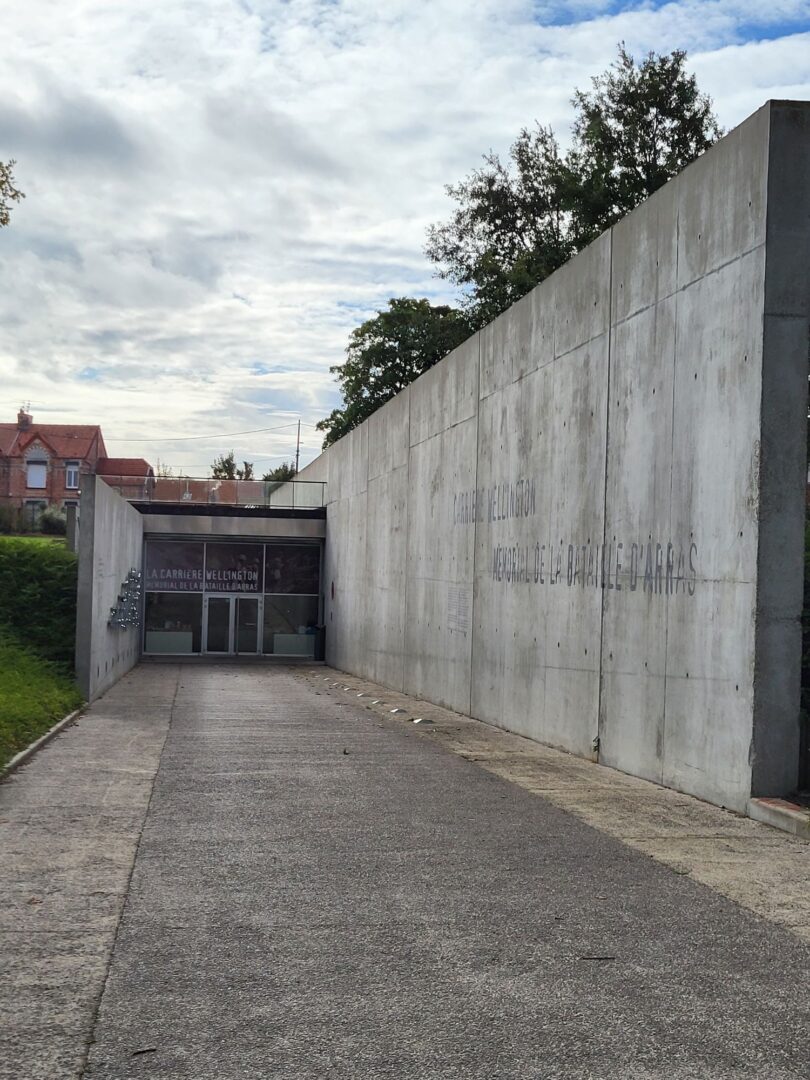
The ride started with a short half hour ride to our first stop, Wellington Quarry, Arras, here Bob had organised a guided tour, with the group split into two groups and putting on the obligatory period hard hats, we headed 20mtrs beneath the cobblestones of Arras to the Wellington Quarry, a place steeped in memory and emotions.
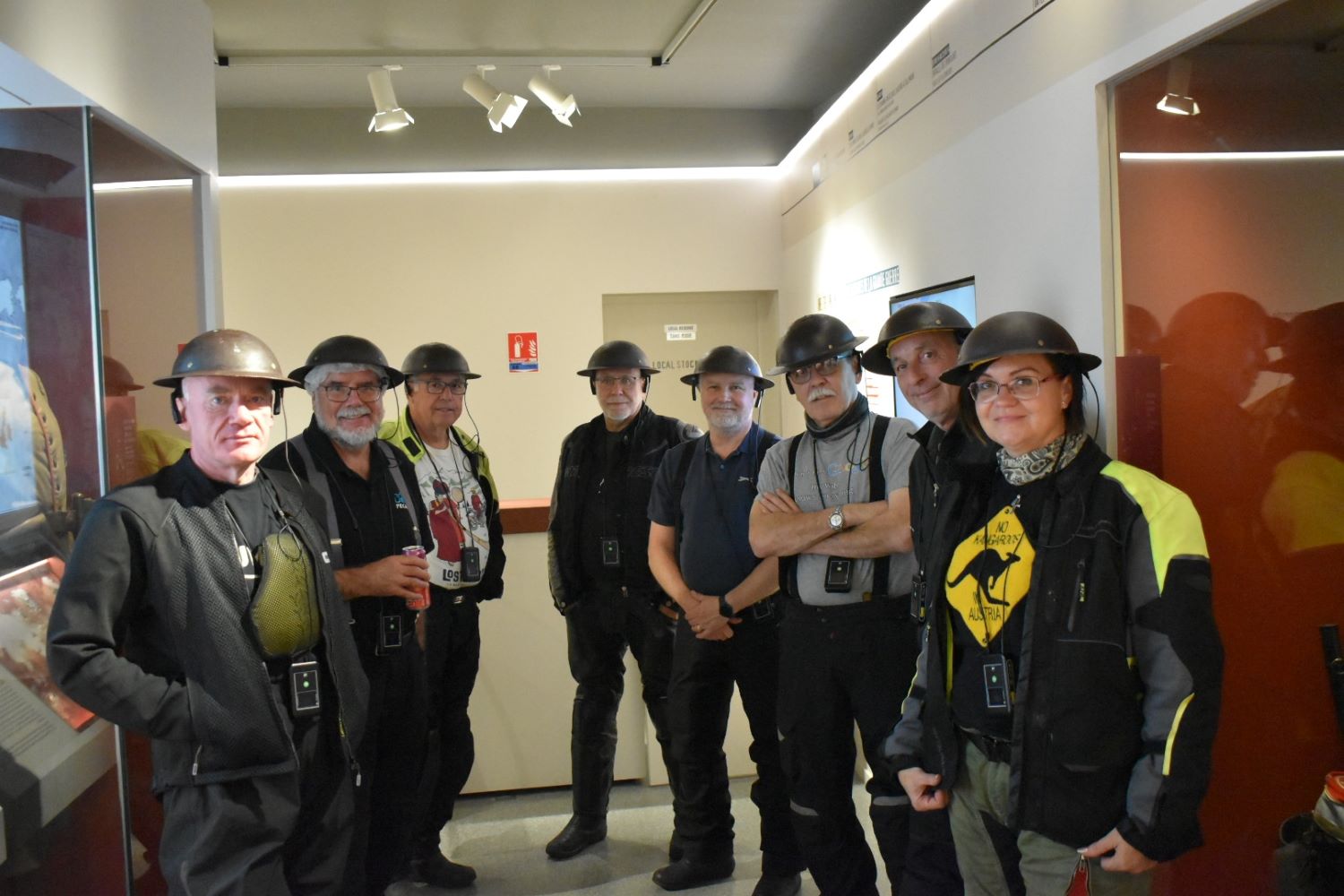
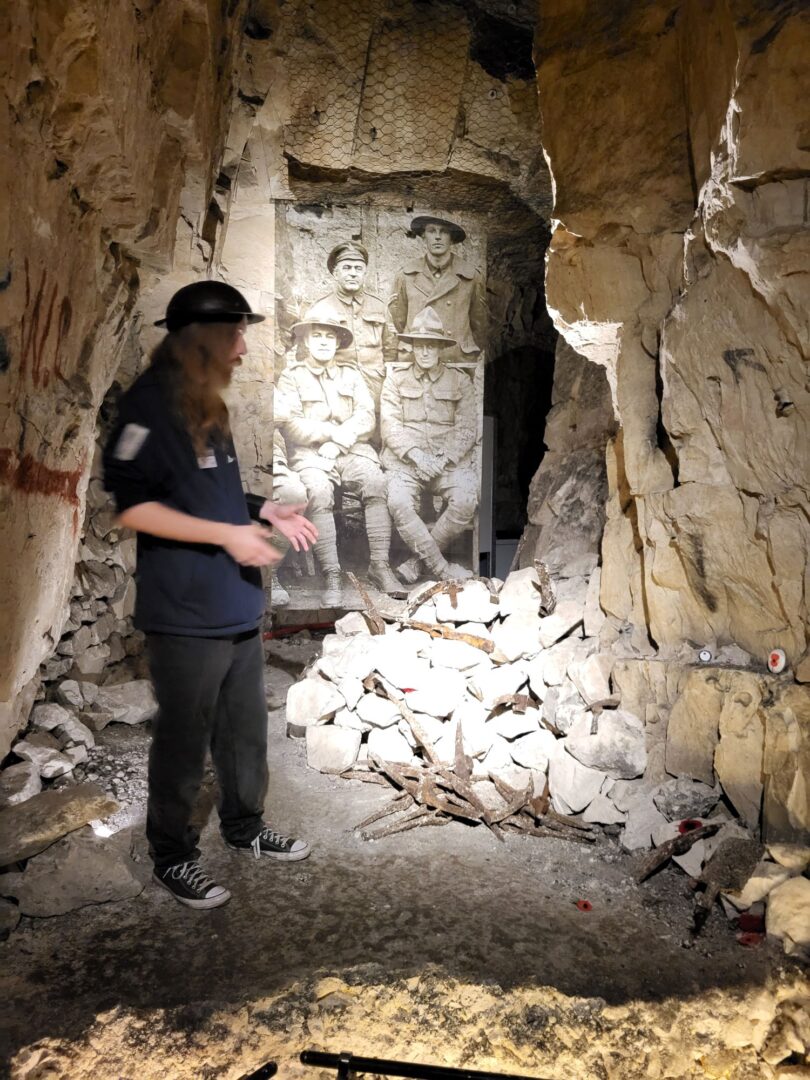
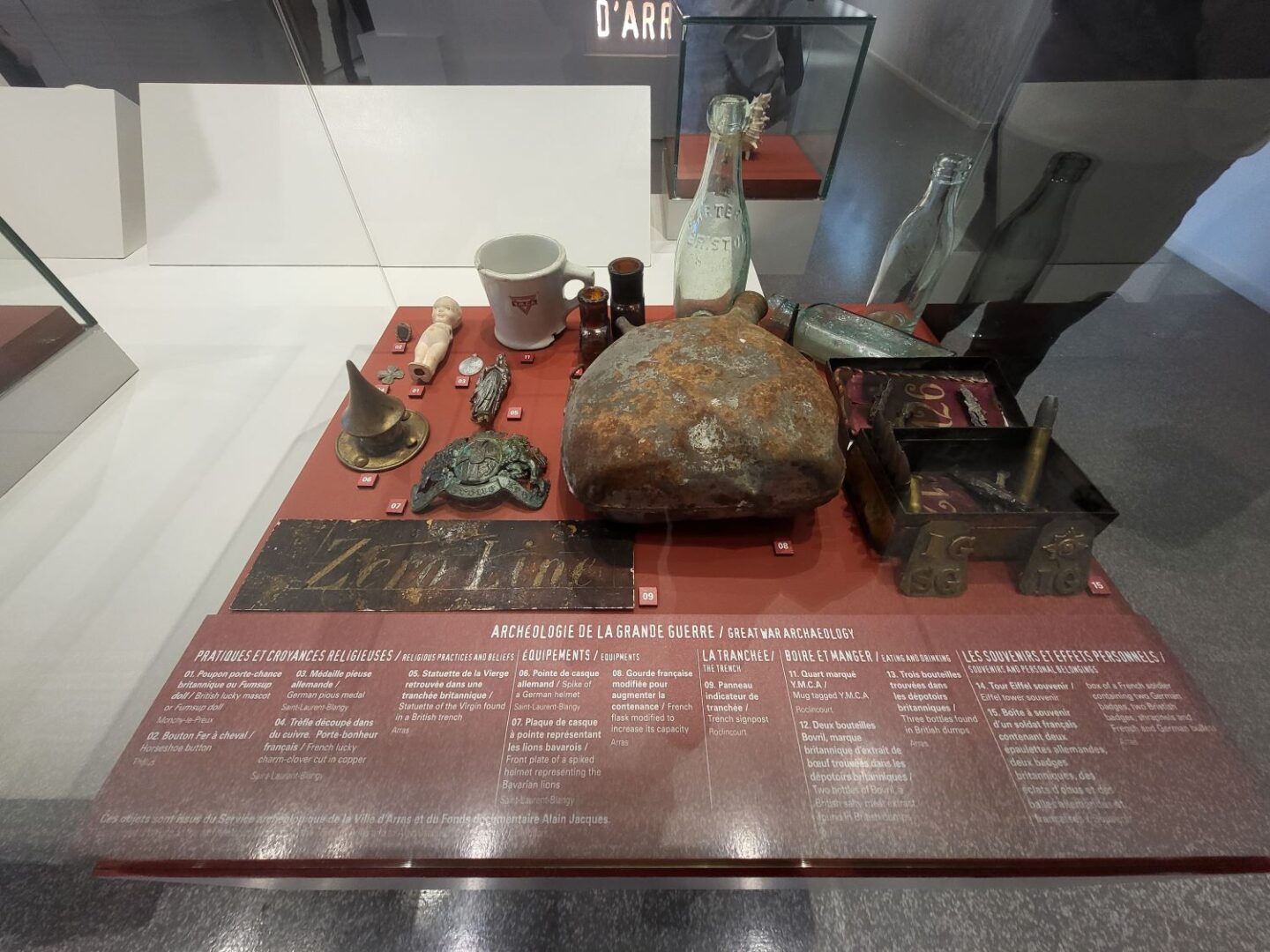
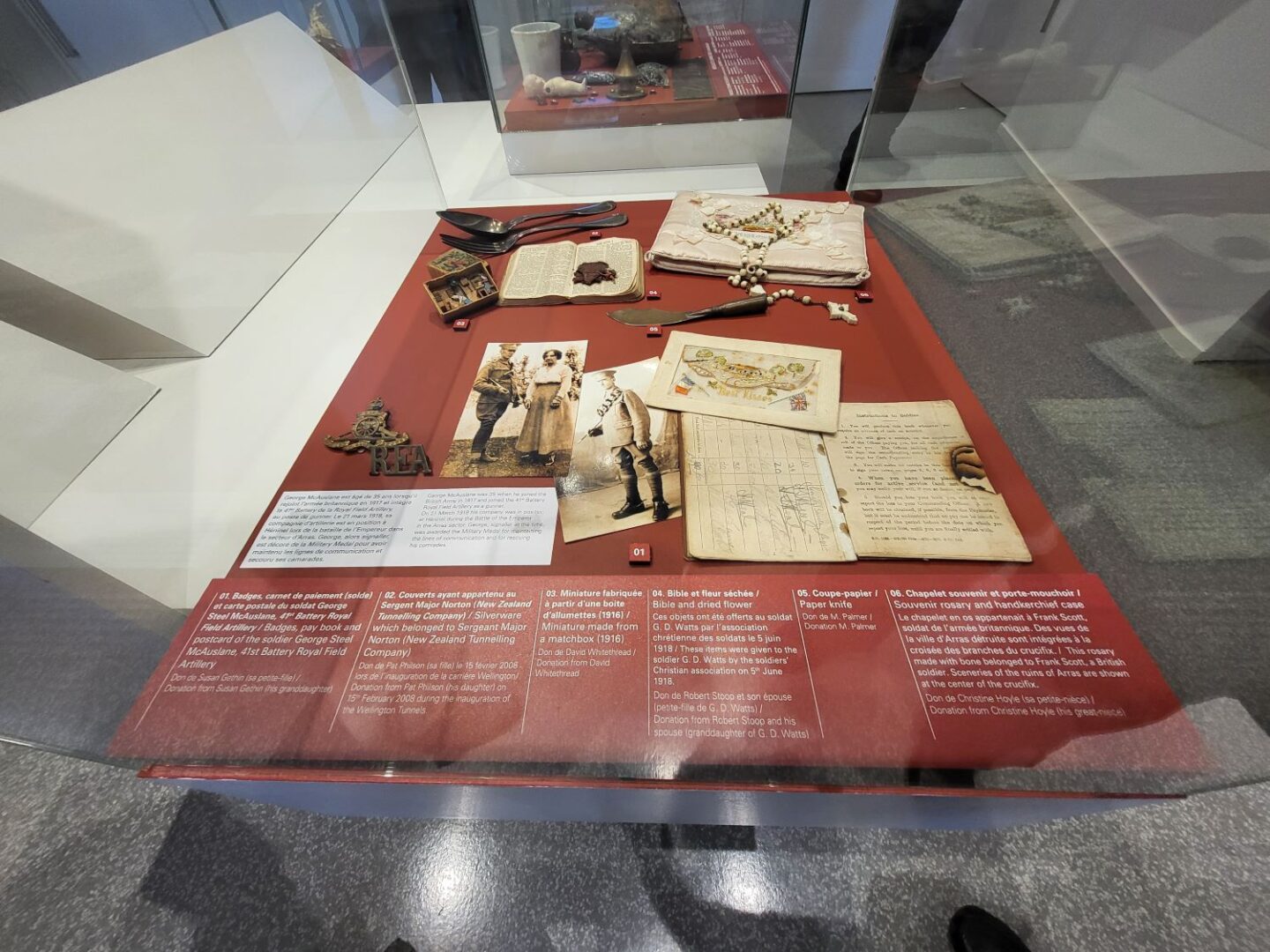
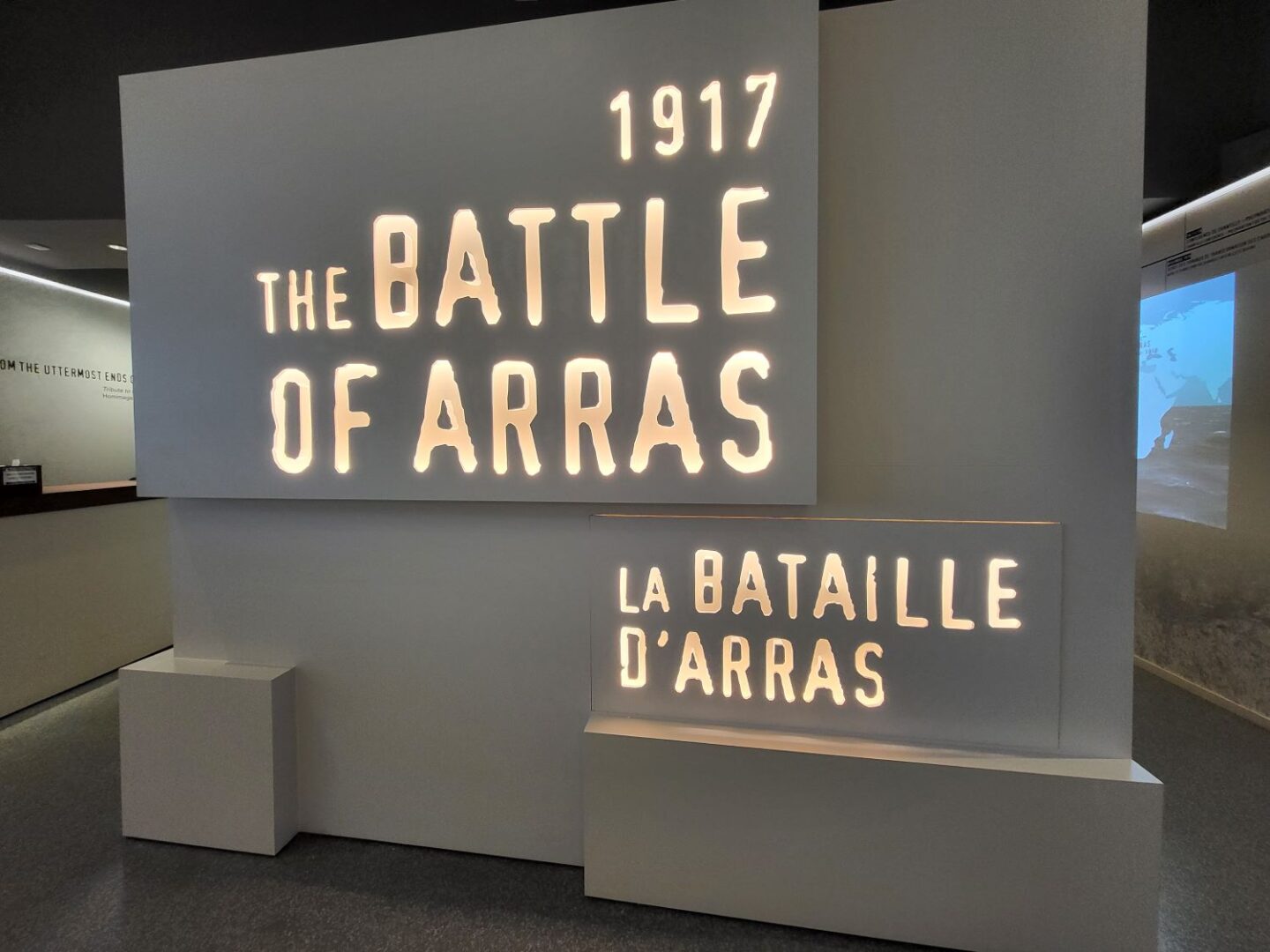
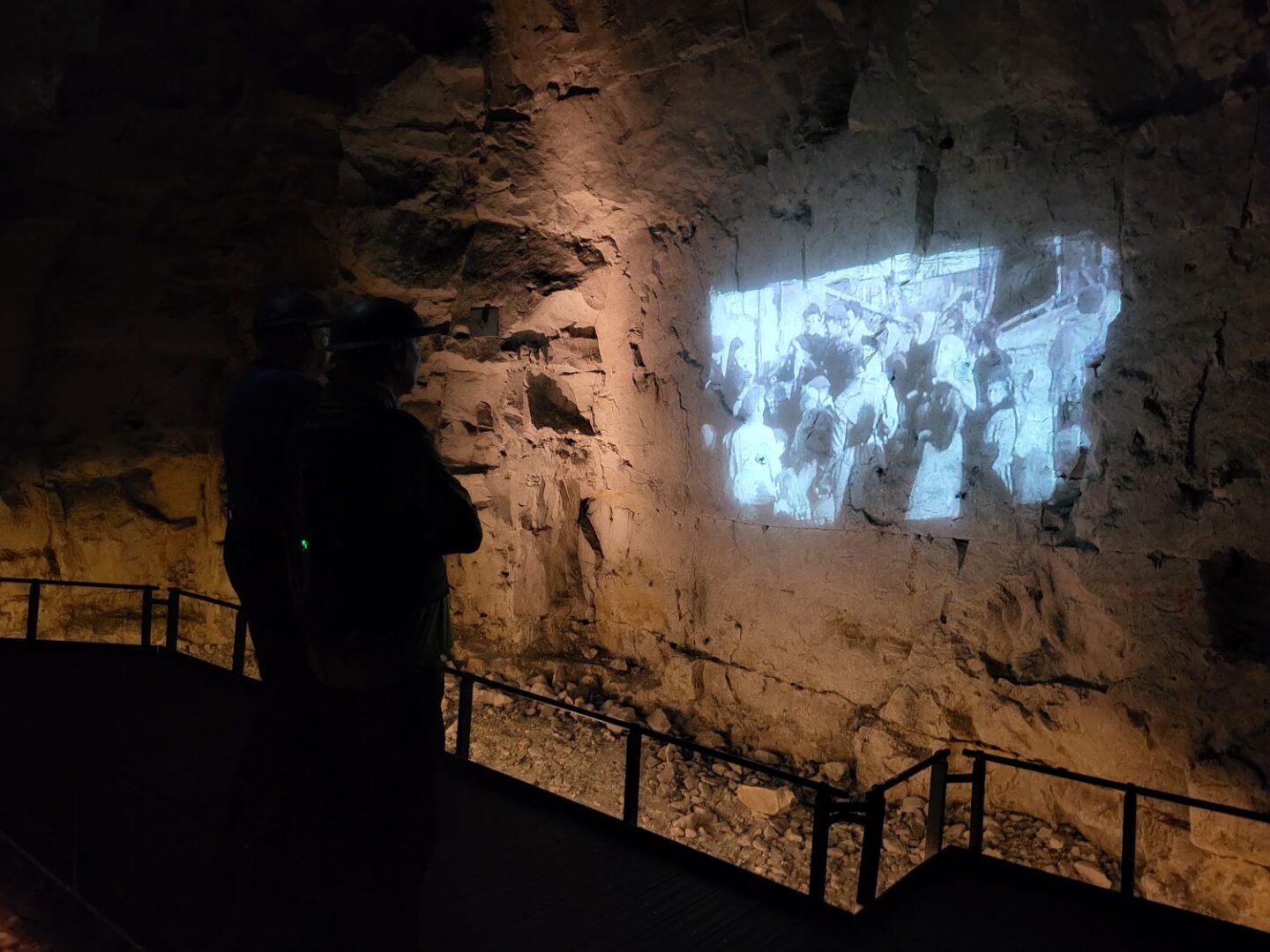
Beginning in November 1916, the British prepared for the Spring Offensive of 1917.
Their brilliant idea, was to have New Zealand tunnellers connect the City’s Medieval chalk quarries, creating a veritable network of underground barracks, capable of accommodating up to 24,000 soldiers living quarters and hospital, it was an underground City, named Wellington after the New Zealand Capital.
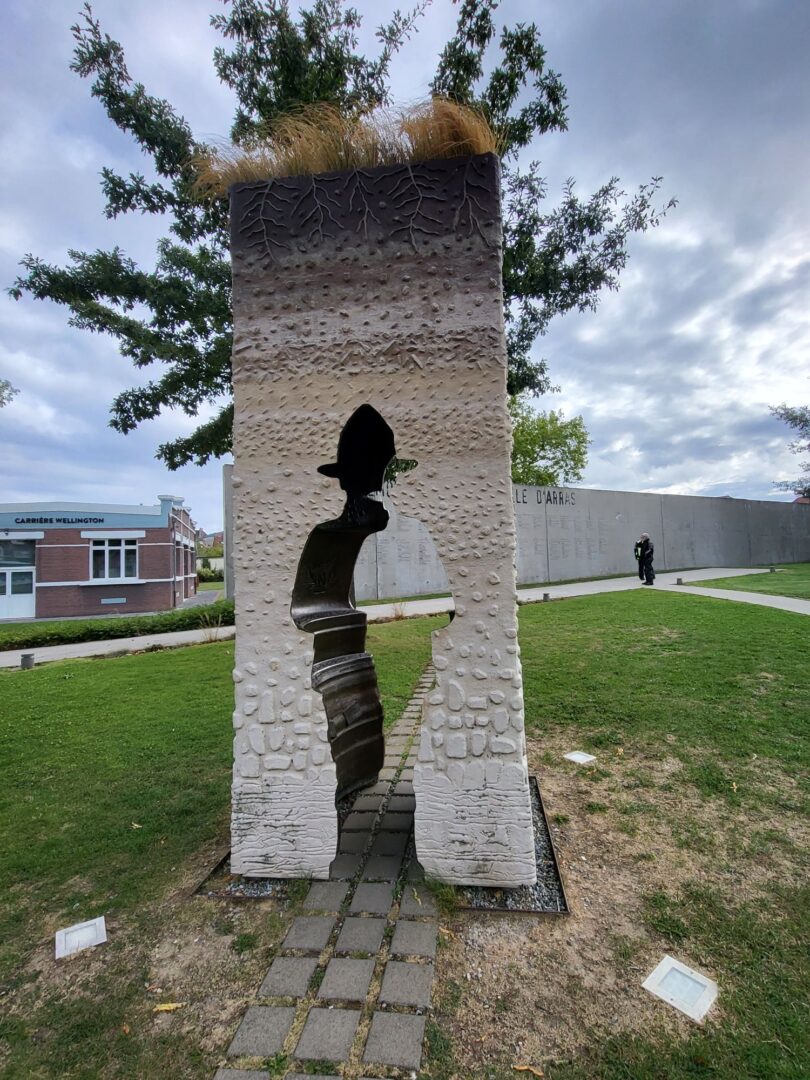
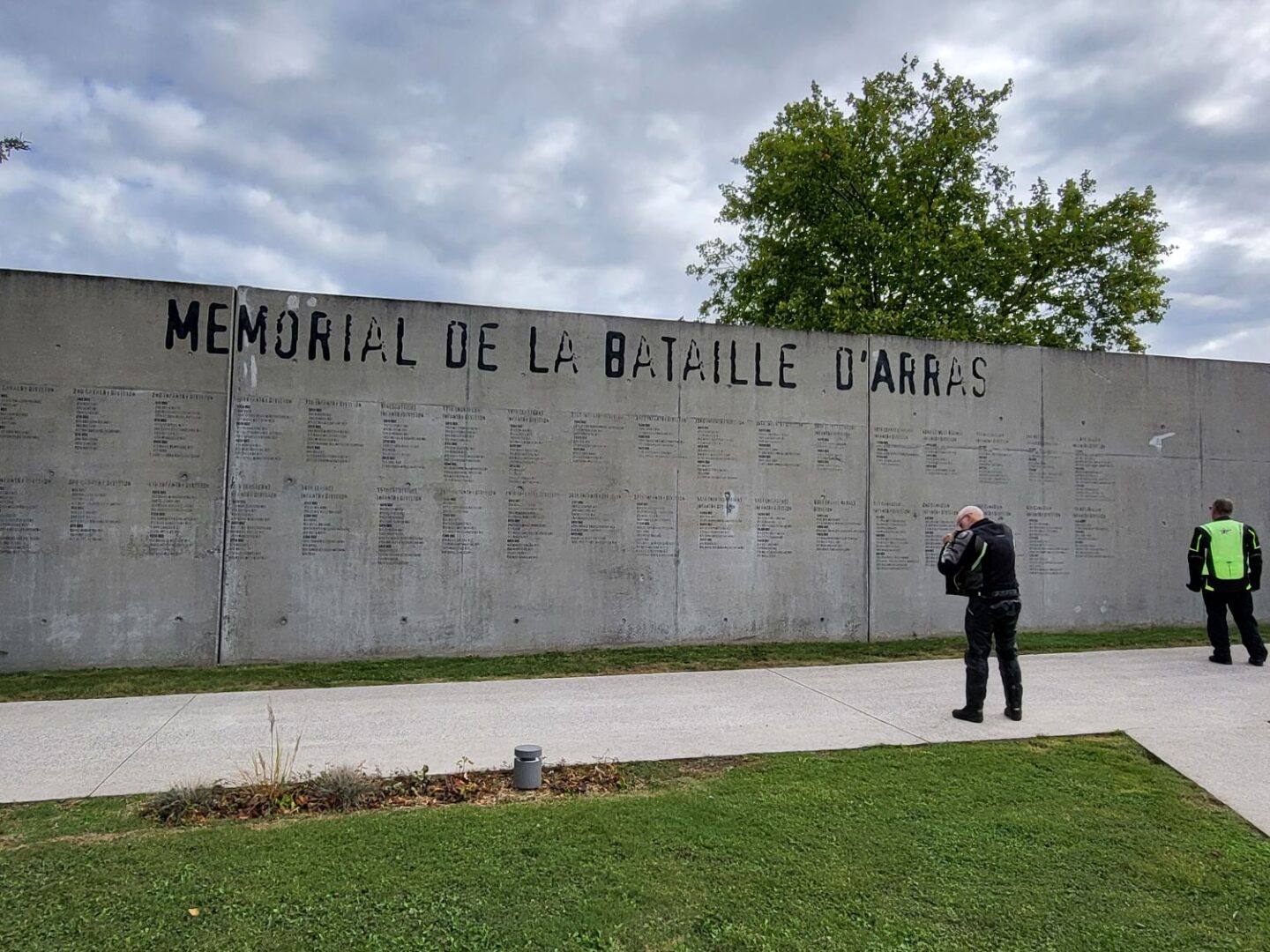
The Battle of Arras Memorial Wall, in the gardens is inscribed with the names of The Infantry and Cavalry involved in the Battle of Arras.
Towering over 3mtrs high, a bronze work pays tribute to the New Zealand tunnellers who played a decisive role in the Battle of Arras.
Lunch was a short 10min ride to Avril Williams Tea Rooms, Ocean Villa’s, this was a British Run Café serving excellent food.
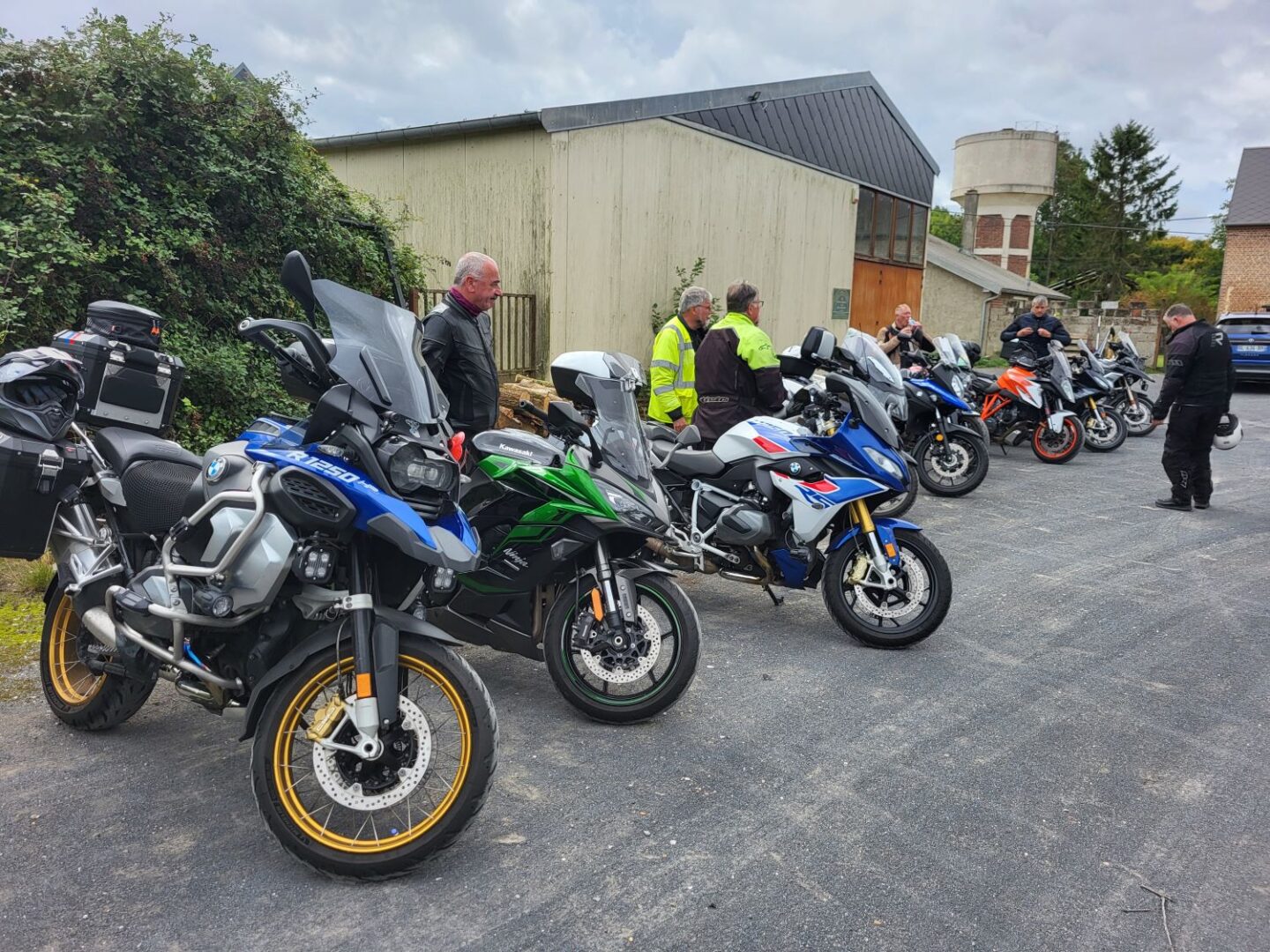

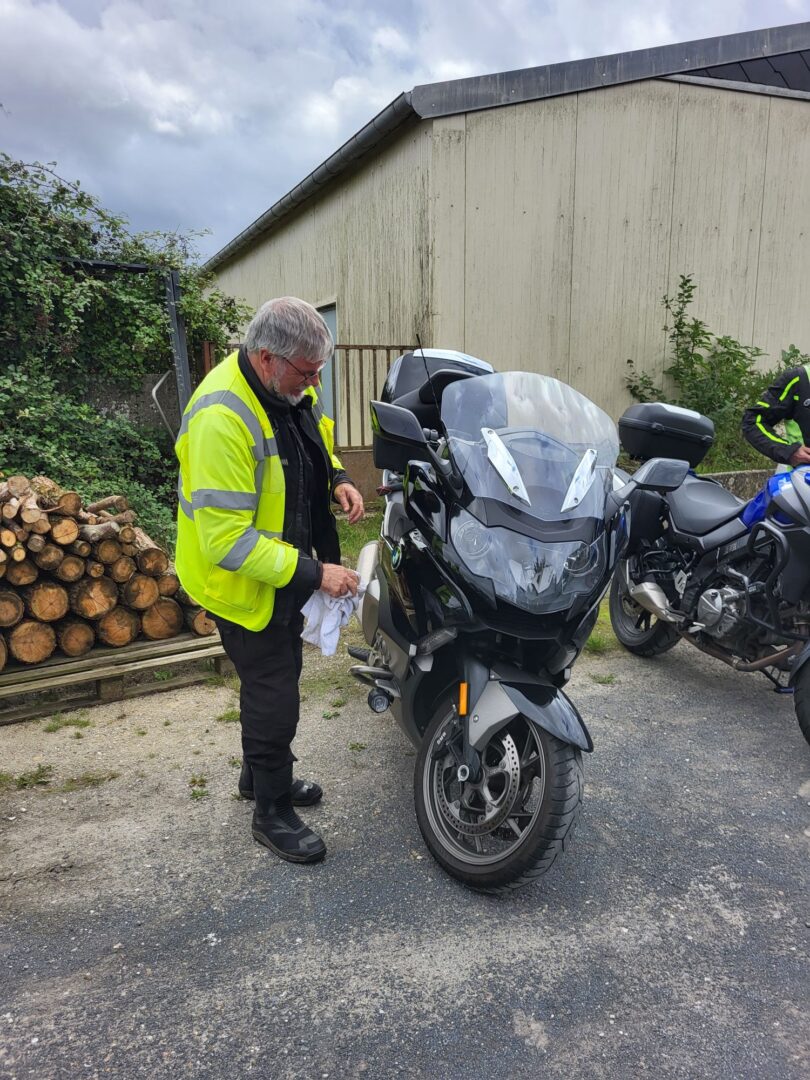
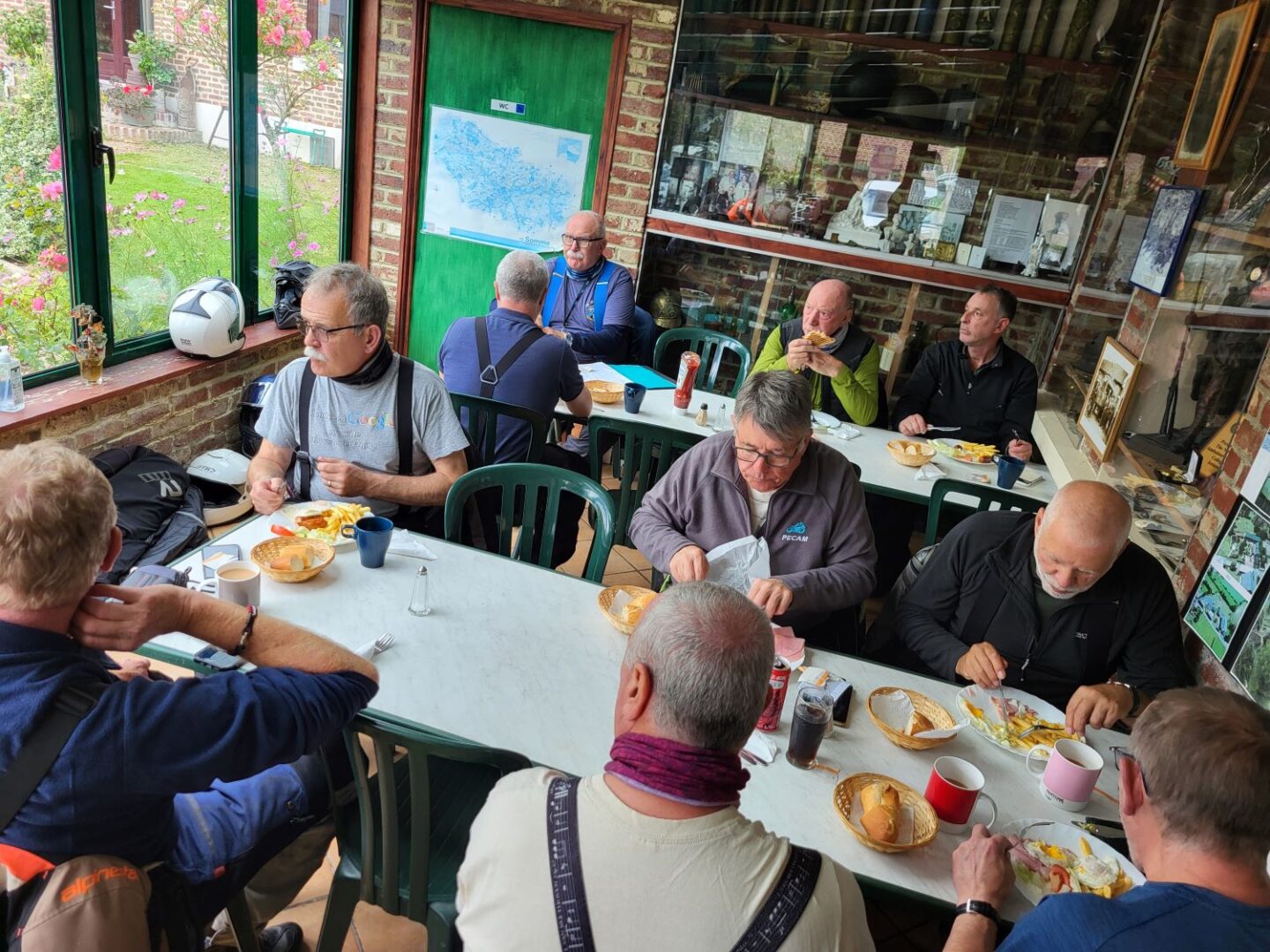
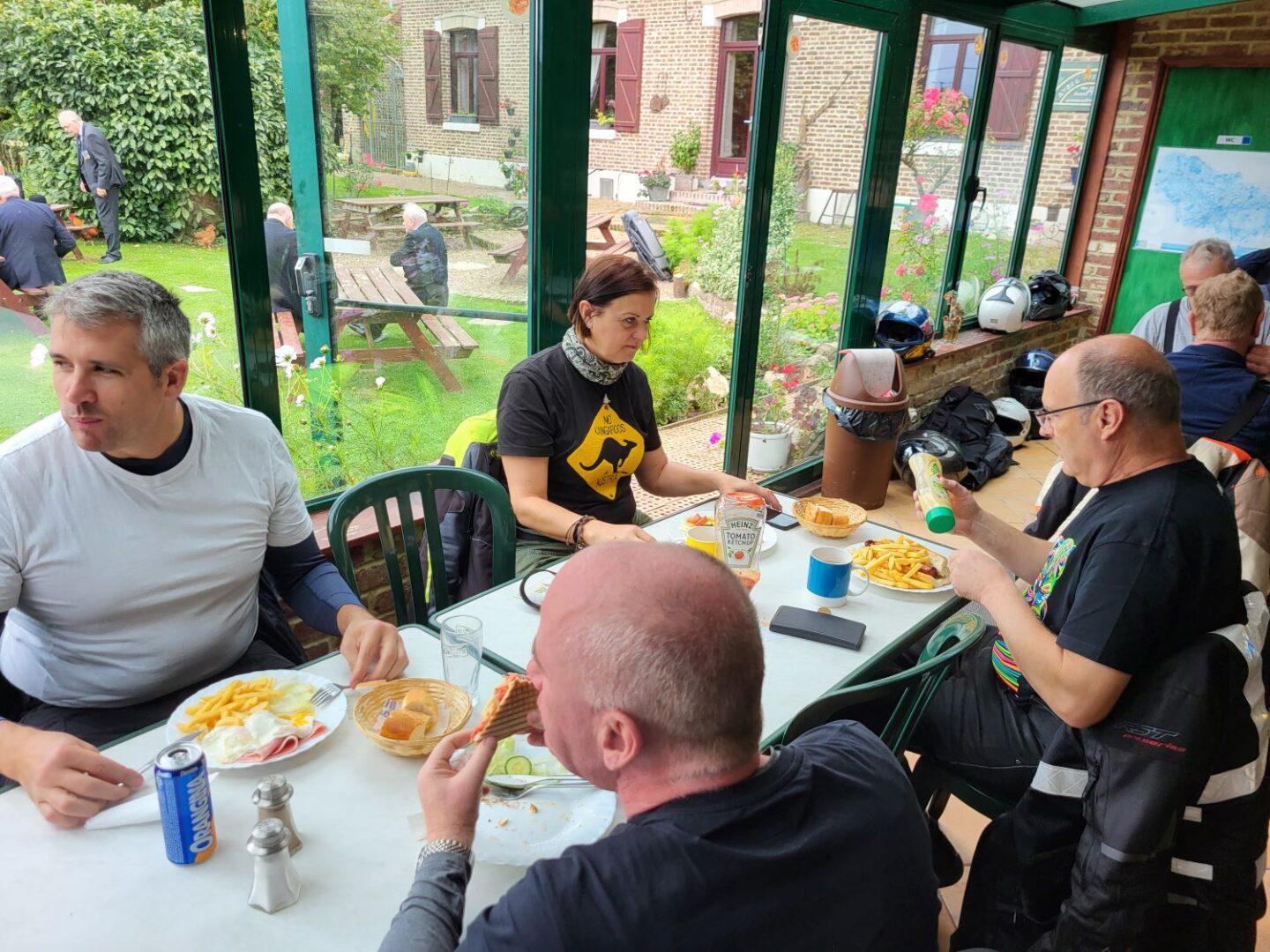
On the site of the Café, there was remains of a Great War Trench,
A brief history of the trench:
1914: September – The French dug the original communication trench when the front line trenches were established facing Beaumont Hamel.
1915: July – When the British took over this sector of Auchonvillers from the French, the 2nd Monmouthshire’s re-dug the trench, strengthened the walls and lined the floor with bricks from the destroyed house.
1916: July 1st – Men of the 29th Division used this communication trench taking them to the front lines facing Beaumont Hamel for the opening of the Battle of the Somme. Many of these men would have walked, or been carried, back along the same trench.
1918: The trench was used once more, this time by the New Zealand Division when the Spring Offensive brought the Germans back to the Beaumont Hamel area.
1997: The Khaki Chums, a living history group, began to dig the trench as we know it today, revealing enough evidence to attract the interest of professional historians and archaeologists.
1998: Andy Robertshaw brought together a team of specialists in the field to conduct a professional archaeological investigation of the trench, the first of its kind. The team, originally known simply as the ‘Trench Team’, are now known and respected internationally as ‘No Man’s Land’.
1999 to date: An Army team, nicknamed the ‘Pink Panthers’, led by Sean Featherstone undertook maintenance of the trench, reverting it to combat the effects of erosion on the trench sides. They also rebuilt ‘Sam’s Abode’, the sentry post at the front of the property, featured in Edmund Blunden’s ‘Undertones of War’. With more excavations lengthening the trench, it was necessary to carry out more reverting and thanks go to all volunteers who helped maintain and improve the excavation.
As with the trenches during the Great War, constant maintenance is necessary to stop the walls collapsing, thus allowing visitors to view the trench as it would have looked when in use through the Great War.
As the heavens had opened, again, we sheltered in the Café, with an extra brew.
Once again, putting waterproofs on, we headed out to our last visit of the tour, Association du Tank de Flesquieres, to visit Deborah D5, the tank discovered by Philippe, the owner of the Hotel Beatus. Bob had arranged a private tour with Lou-Anne from the Hotel, who thankfully spoke perfect English.
The hunt for the tank at Flesquieres was inspired and led by Philippe Gorczynski, an historian of the Battle of Cambrai, and author of the book ‘Following the Tanks’.
Philippe knew there were persistent stories of a tank abandoned and buried in Flesquières. He was convinced it should be possible to find it, and make it a centre-piece of a monument and museum to commemorate the historic battle.
Local reports about the likely burial place were confusing. A villager, Madame Marthe Bouleux, a teenager in the war, remembered seeing Russian prisoners being ordered by the Germans to push a tank into an enormous hole near a café run by her parents. But early investigation with electronic detectors proved negative – and Philippe’s search was Philippe and his colleagues studied documents in British and German archives, and explored other possible burial sites, in other parts of Flesquieres and in nearby Ribecourt, Villers-Guislain, Bourlon and elsewhere. Some sites were promising, but Philippe’s instinct kept drawing him back to the area indicated by Madame Bouleux.handicapped by the needs of farmers and hunters.
After more than six years of difficult research, documents suggested that the tank might be one from ‘D’ Battalion. Studies of original and modern aerial photographs, together with infra-red photos and powerful metal detection tests, showed there was a large metal object buried in a field belonging to Mesdames Cagnion and Queulain.
Excavation began on 5th November, 1998. The three-man team present comprised Yves Desfosses, responsible for the Regional Archaeological Service of the Nord Department, the excavator driver, and Philippe Gorczynski. After one hour of digging, the roof hatch was revealed. It was obvious the tank had been used a shelter by the Germans or the British. That day nothing more could be achieved, and after entering and exploring the tank interior a number of times, Philippe decided to reseal the entrance for safety.
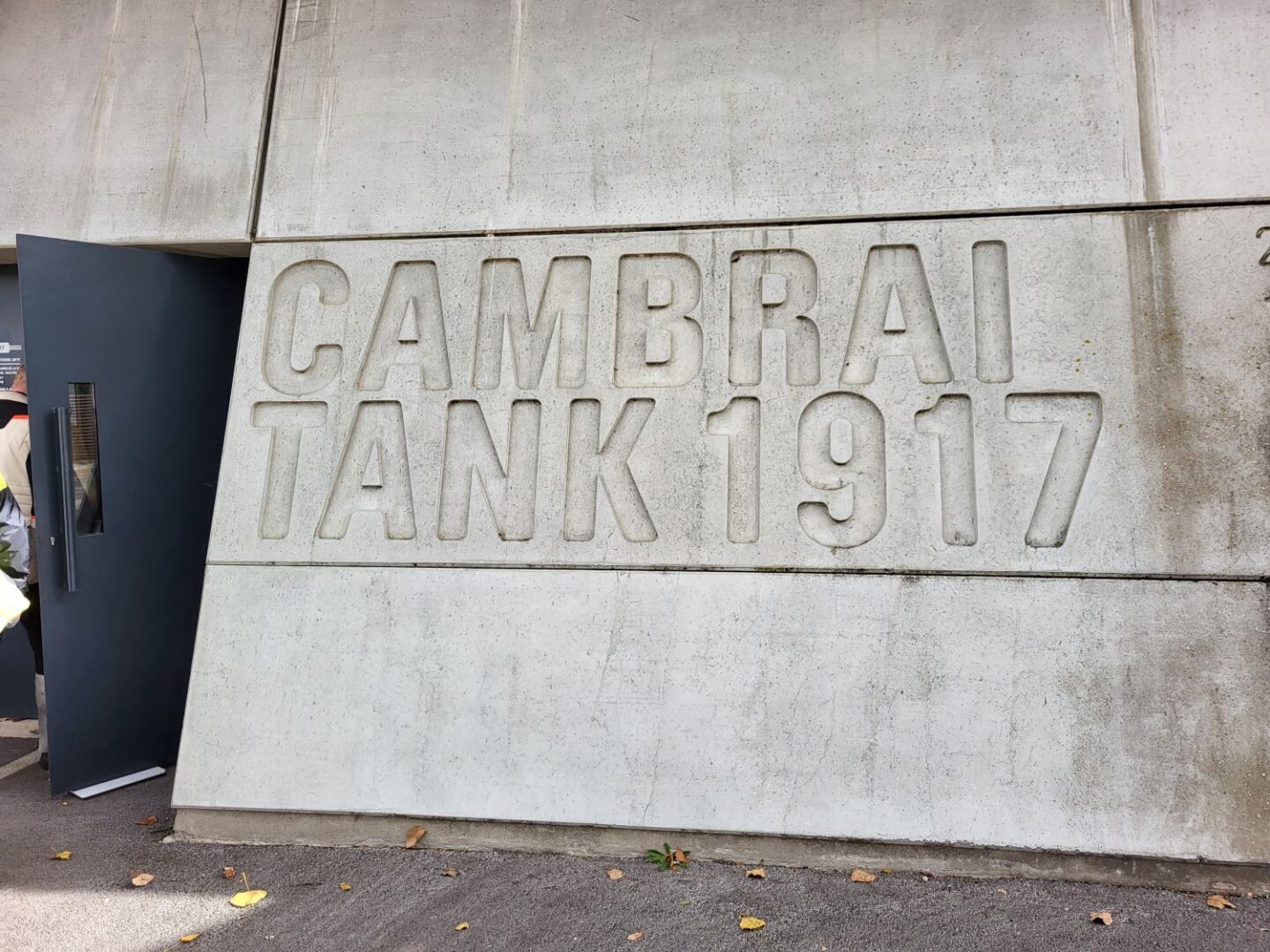
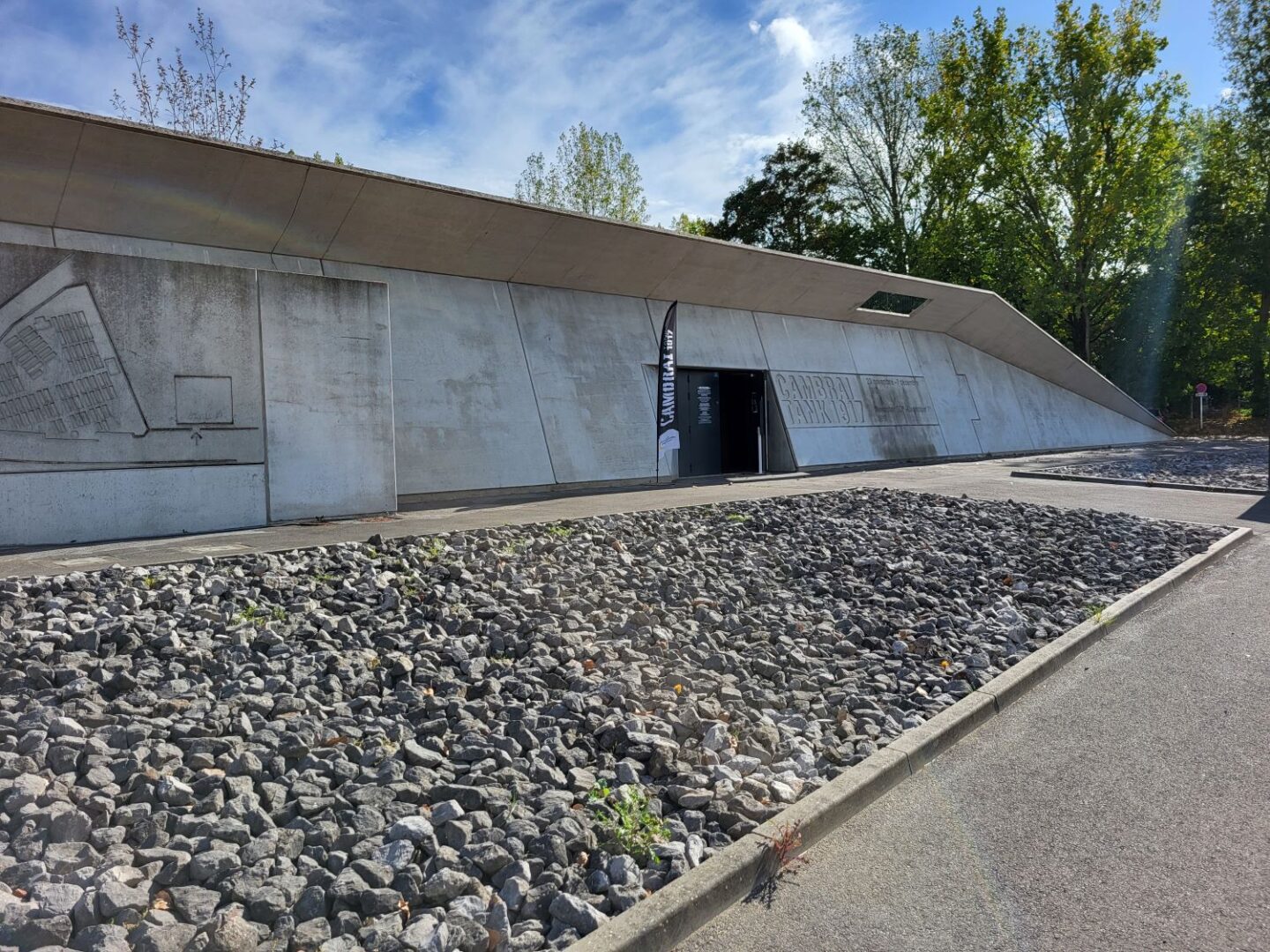
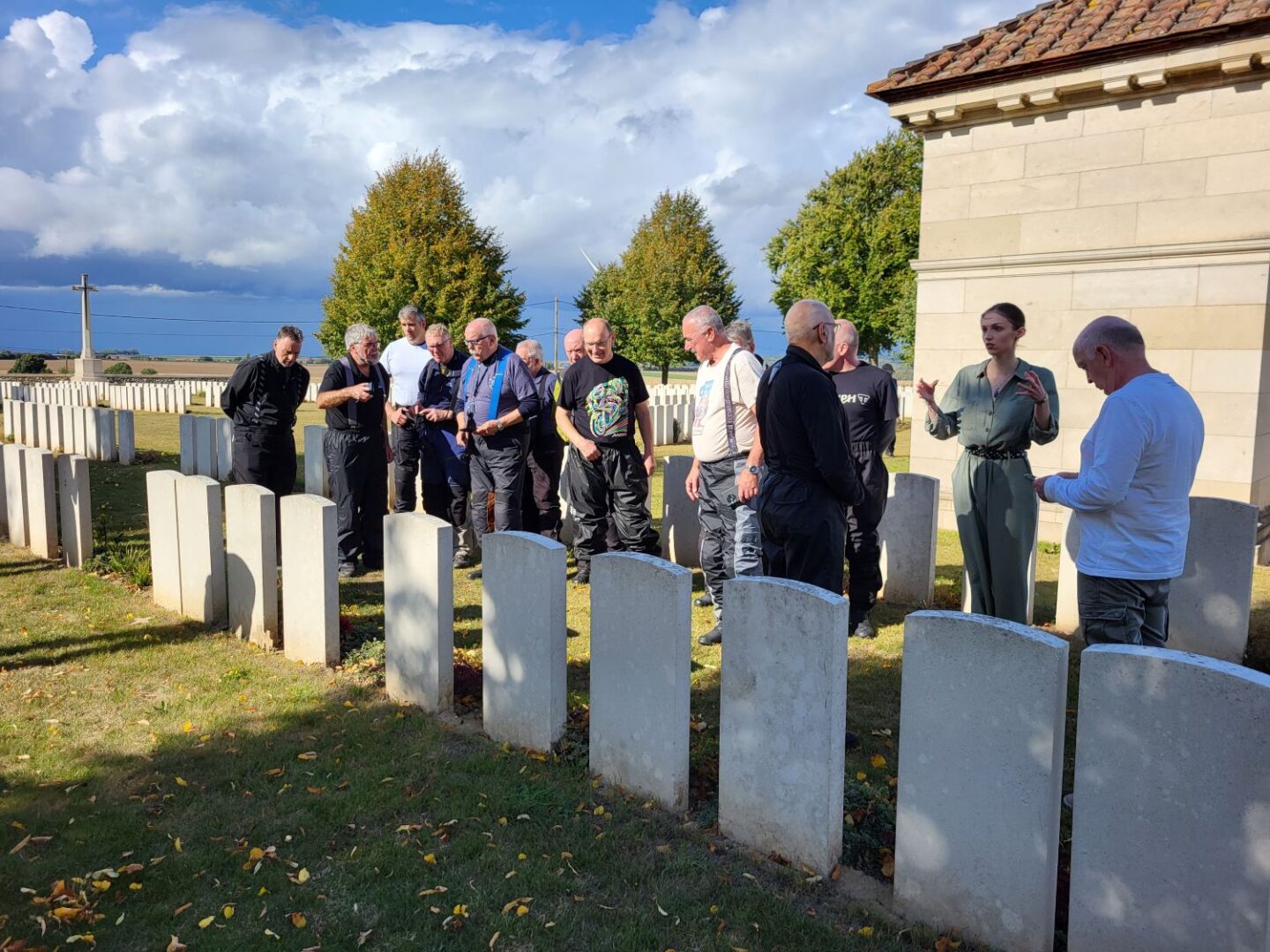
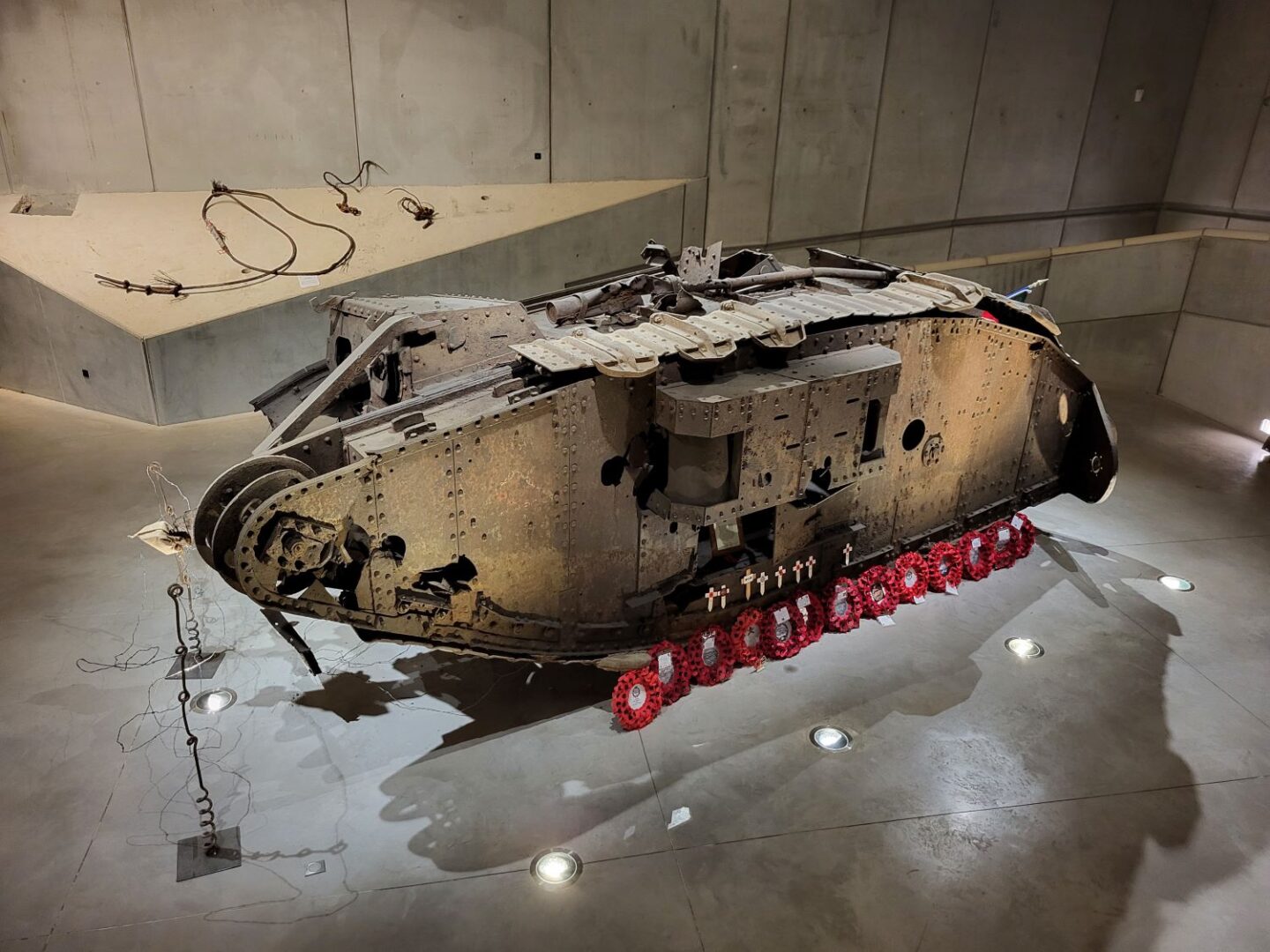
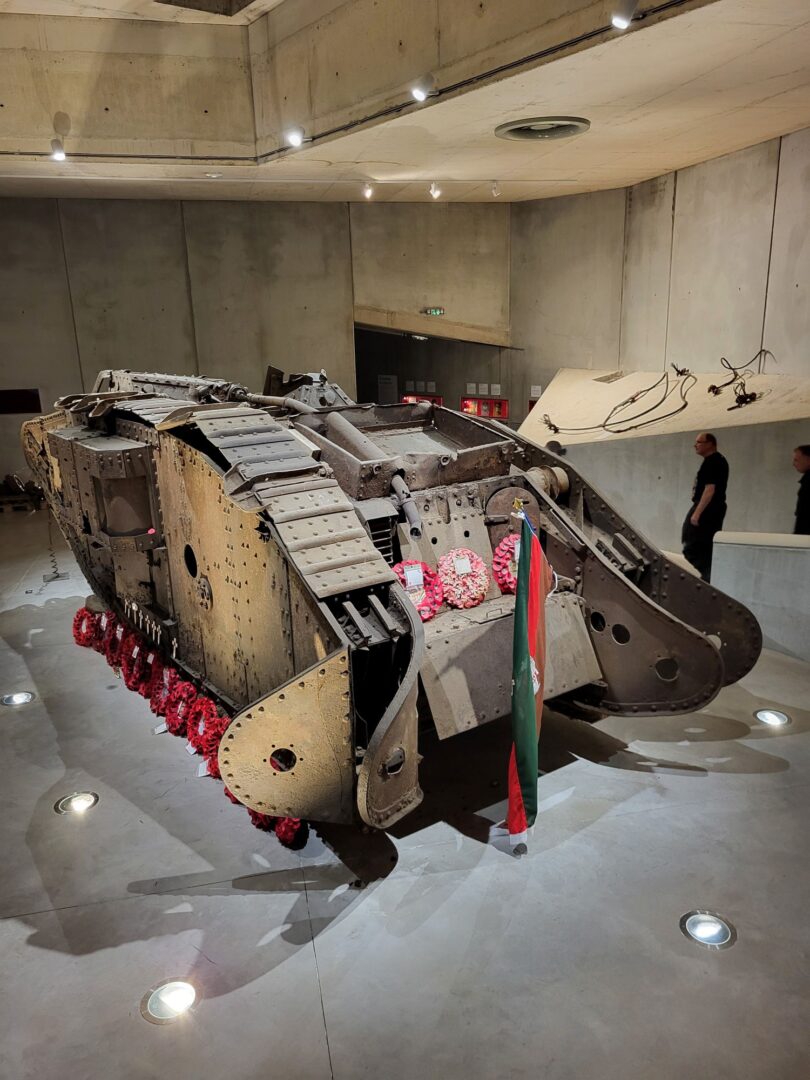
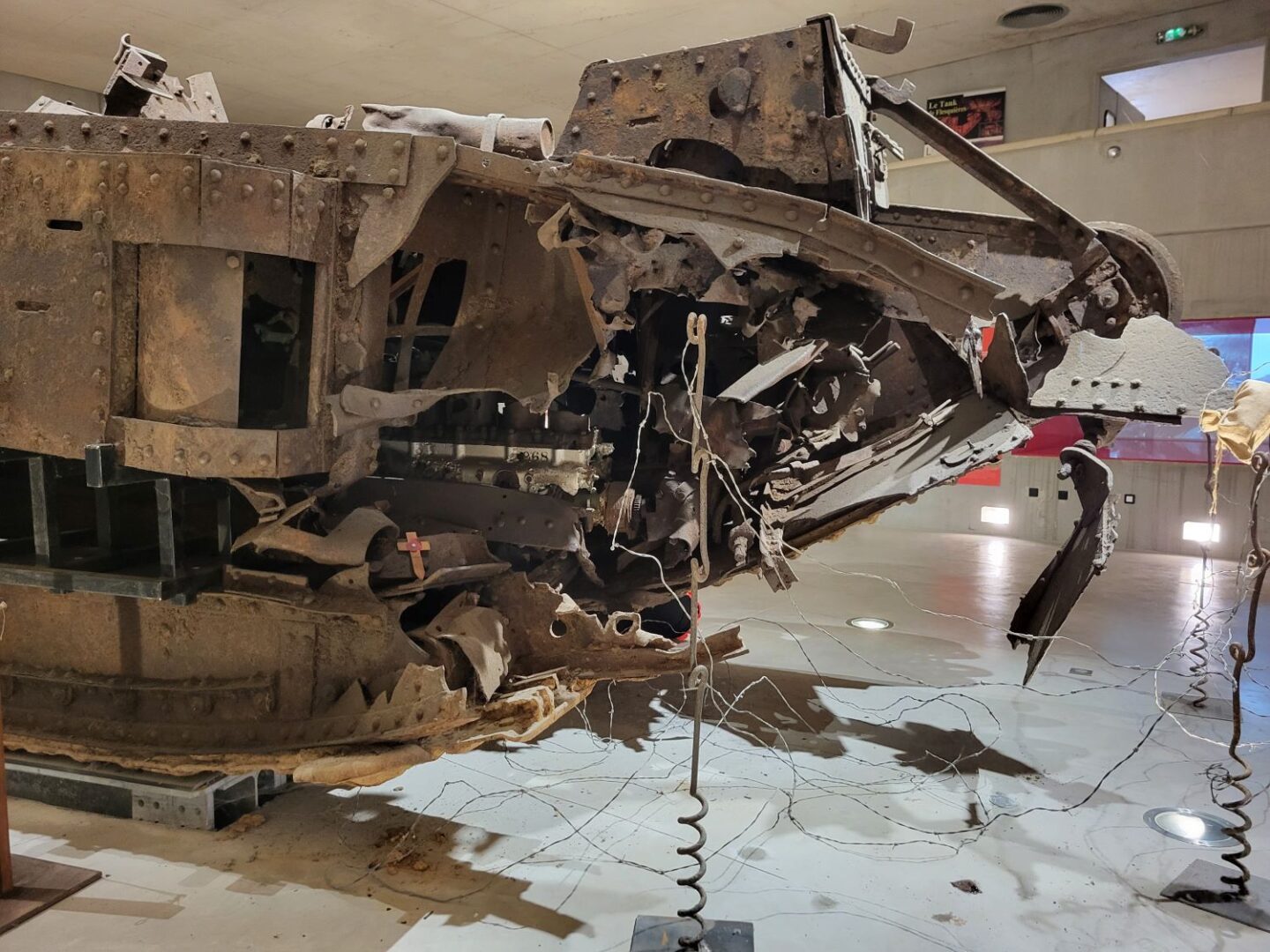
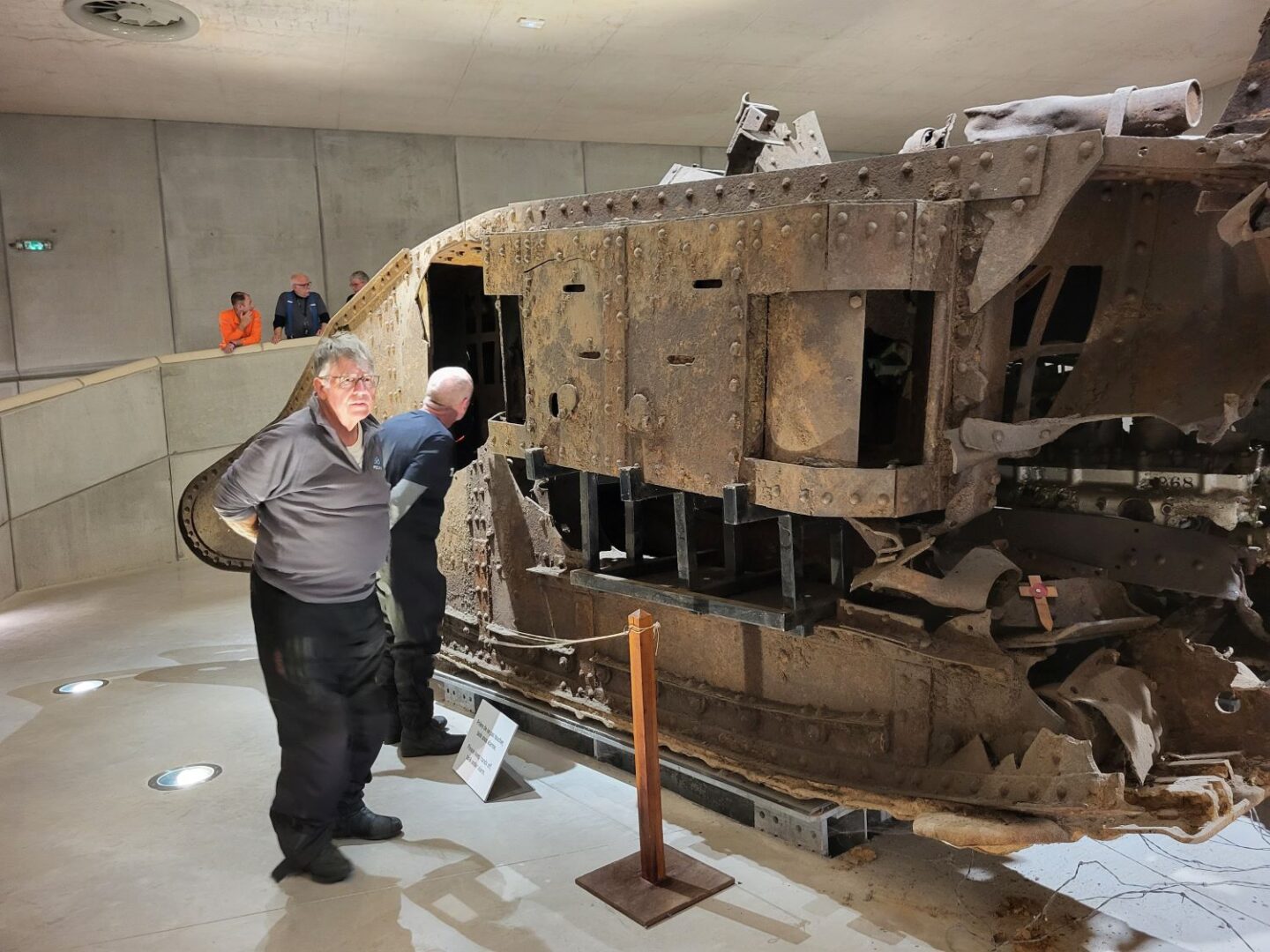
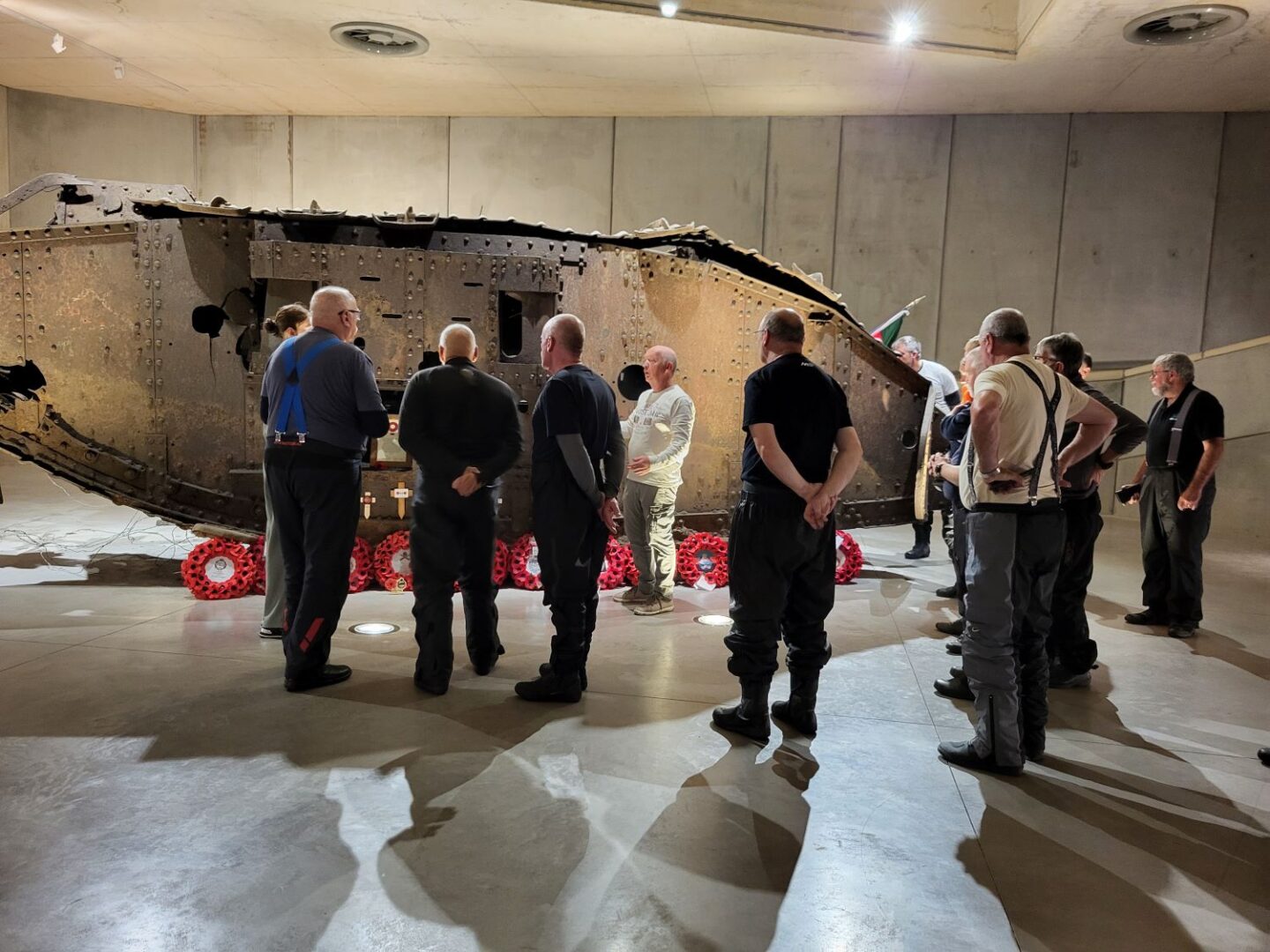
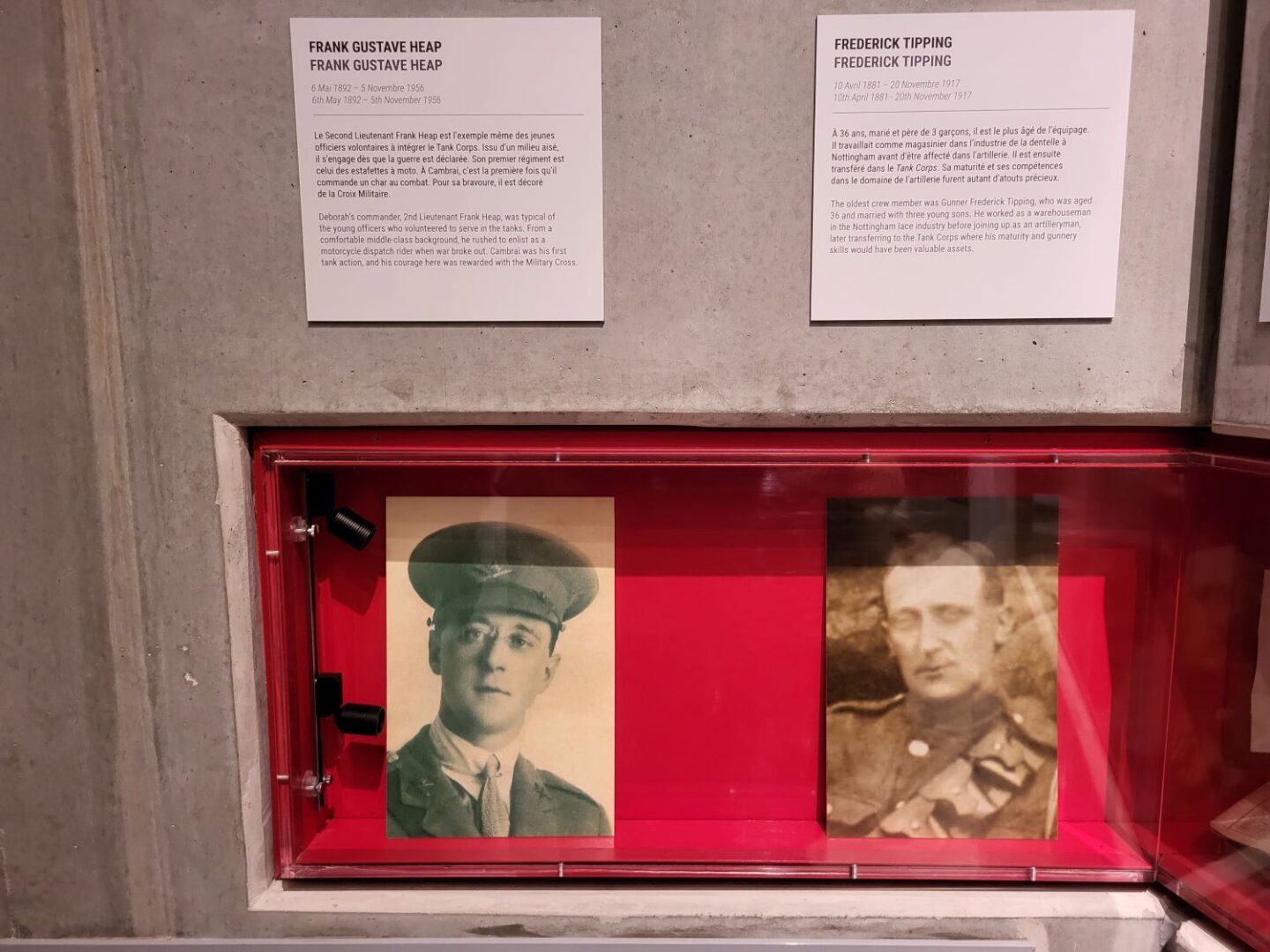
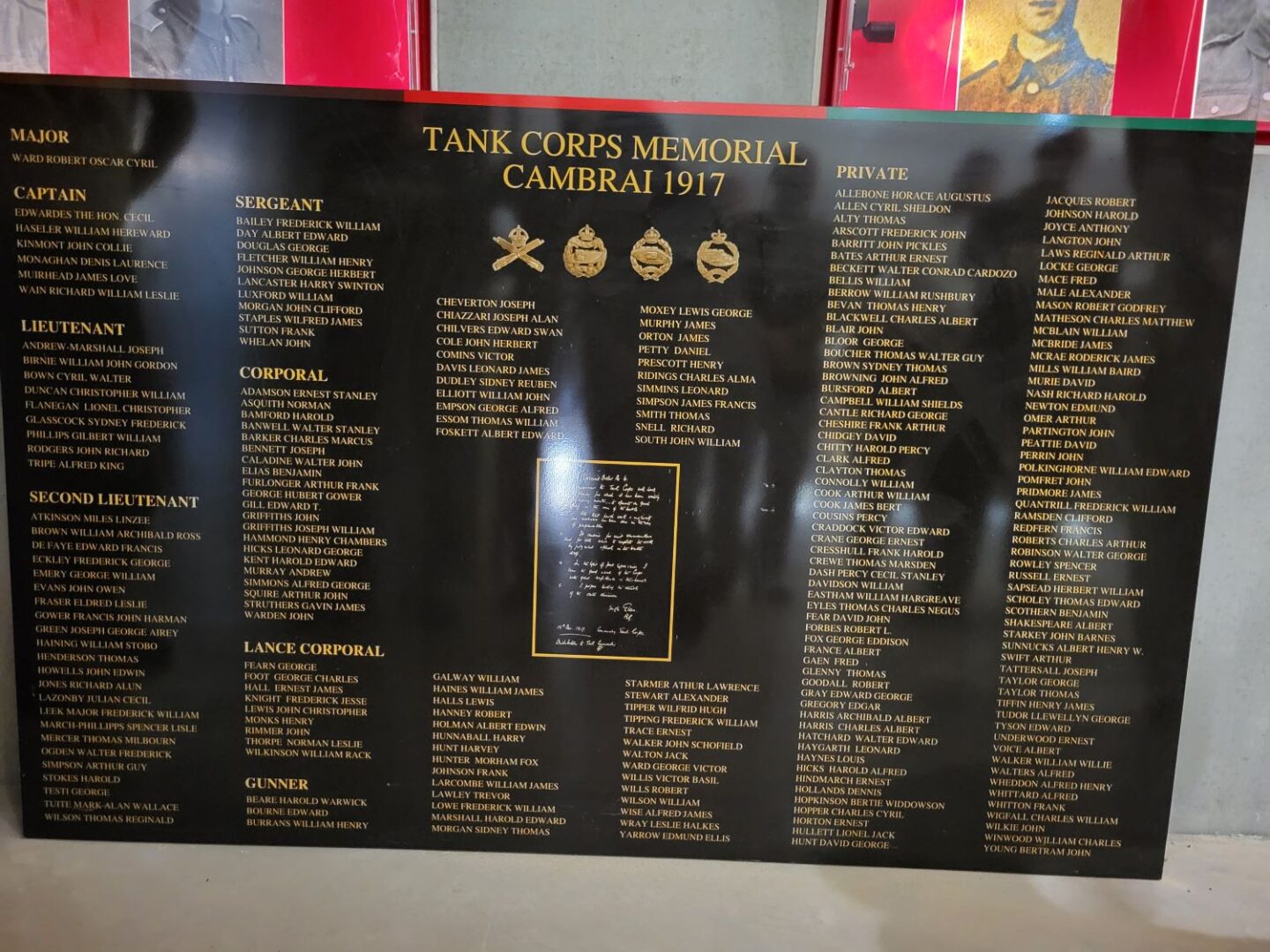
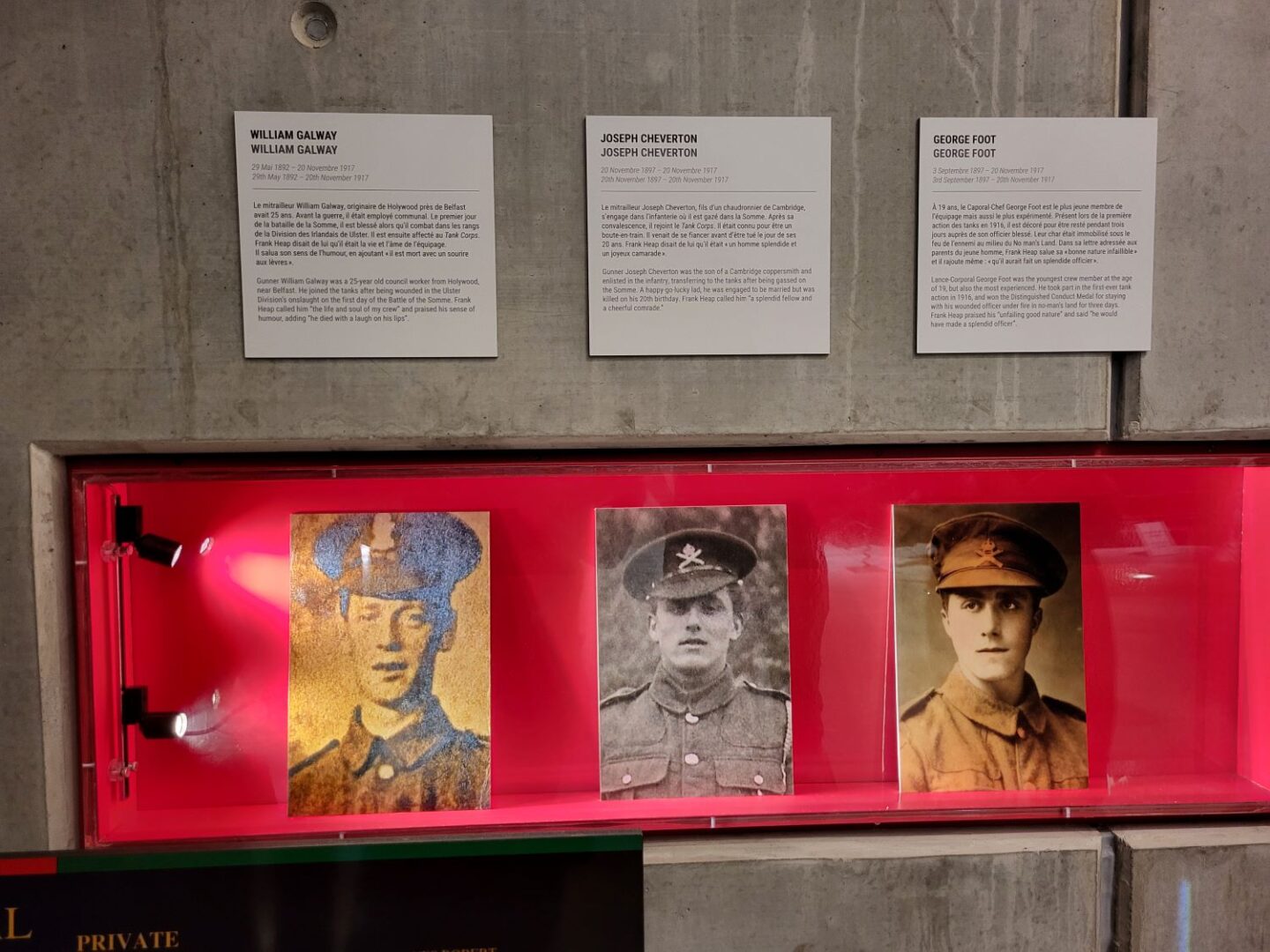
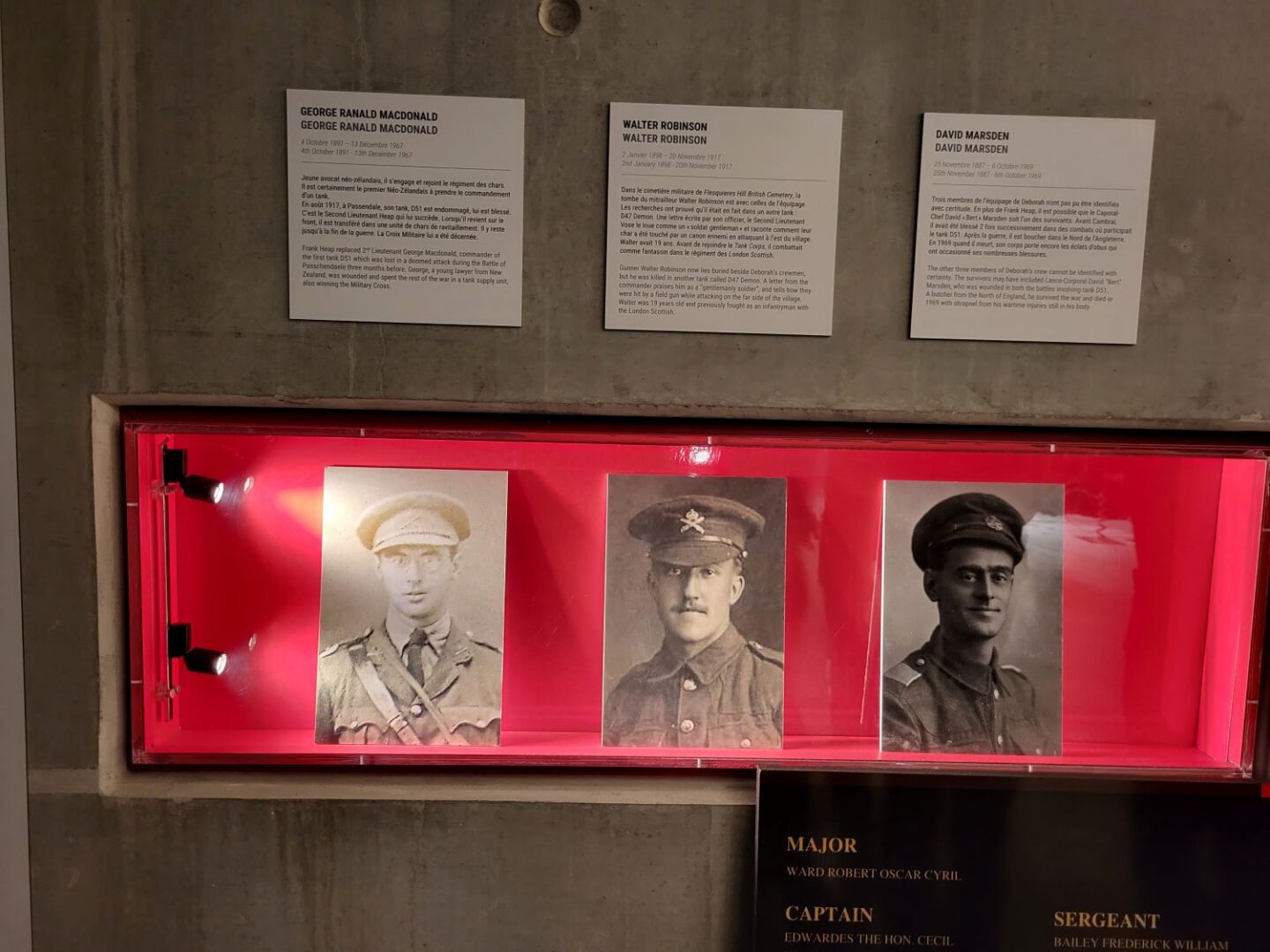
After a few days, the town of Arras, together with Institut Nationale Recherches Preventives, provided a team of professional archaeologists. By 20th November, the 81st anniversary of the Battle, the tank was fully exposed. Many dignitaries and media arrived from all over the world. A special ceremony was held and a wreath laid in memory of those soldiers from the Tank Corps who were killed in the Battle.
Following our final visit of the tour, we heading back to the hotel for our final evening, in the hope that (despite the very black sky) we would make it before the rain started.
After another excellent evening, in which we thanked Bob for organising and leading another fabulous tour, we headed to our beds, ready for the early start.
Sunday 14th September – Final Day
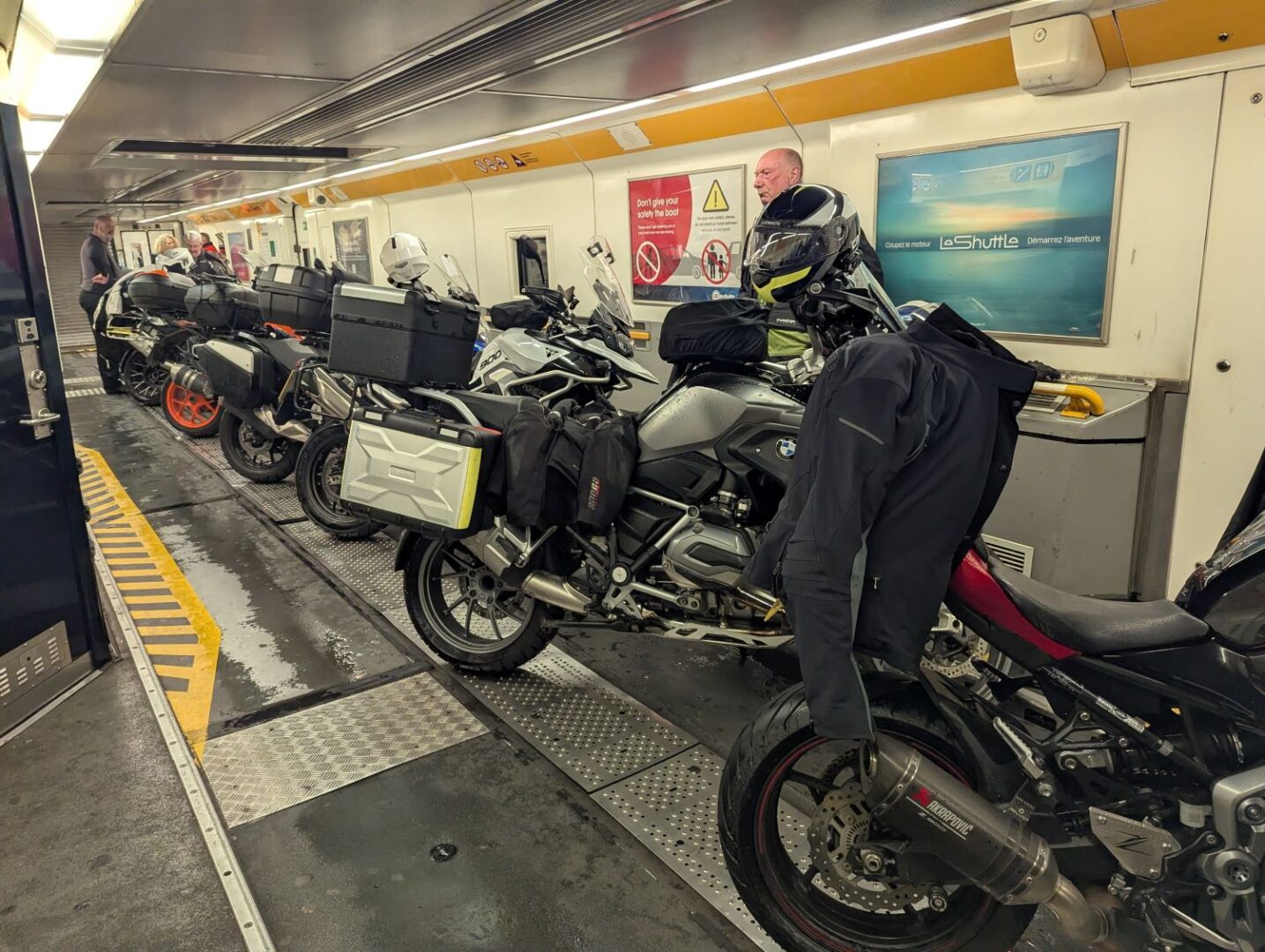
Setting of early to catch the 12.20 (local time) train home.
At check in we got split up and some of the group managed to get an earlier train, reaching the other side and back on English soil, we all made our way home, trying to avoid the rain again.

All in all, an excellent few days, thanks to everyone for their Company, big thanks to Bob S for all the time and effort it took to organise the visits and routes.